What do you want to learn about?

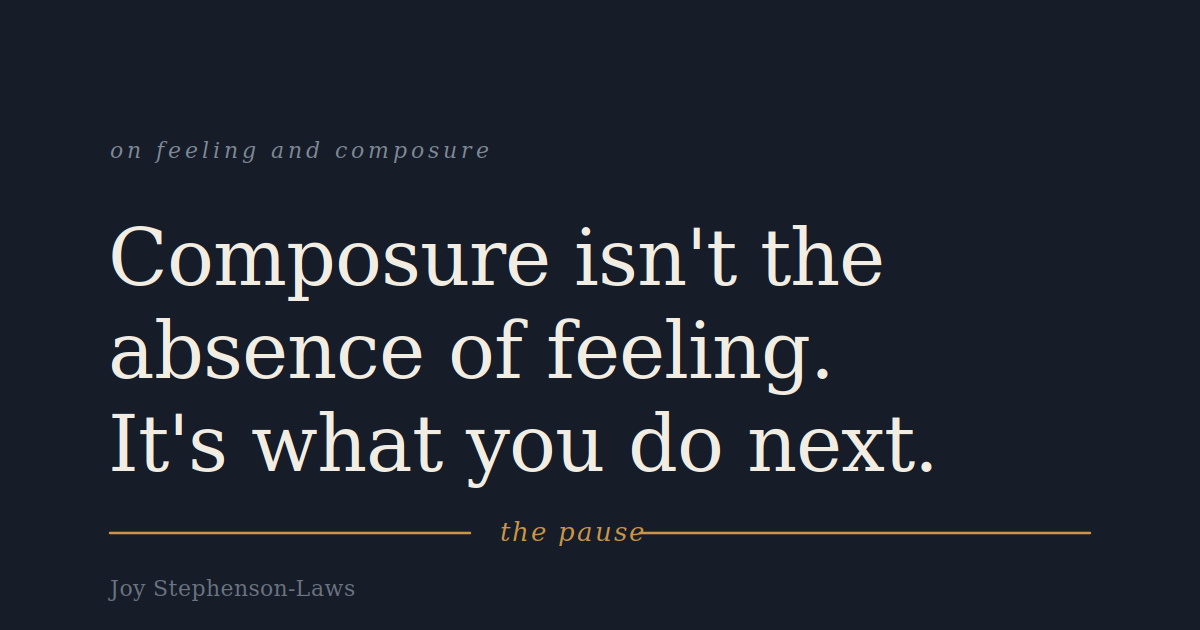
Neither Numb Nor Flooded
An honest look at what separates composure from suppression, expression from flooding, and why the difference isn't visible on the surface at all.

Normal Blood Test but Still Feel Unwell? Here's What It Means
Your Labs are Fine, You are Not!
How to Build the Space Between Feeling and Action
Most of us react before we think — not because we lack discipline, but because no one taught us there was a space between the feeling and the reaction. This article explains how to build that space using evidence-based tools and why building it is only half the skill.

Building the Space Between Feeling and Action
Many well-researched tools build the space between feeling and action. We were never taught how to properly use it.

Why Your Brain Loses the Ability to Pause Under Stress — and How to Get It Back
Under stress, your brain can shift into survival mode before you have time to think. This article explains why the ability to pause is not just willpower, how stress changes the balance between the amygdala and prefrontal cortex, and how simple practices like slow breathing and reflection can help you respond with more control.

Family Is Everything: The Half-Truth I Had to Unlearn
‘Family is everything' sounds like love, but sometimes it becomes a rule that keeps us tied to relationships that cost us our peace. A personal essay on estrangement, guilt, and loyalty, and the painful freedom of learning that love can matter deeply without requiring you to erase yourself to keep it.

Solitude vs. Loneliness: How Your Body Knows the Difference
Solitude and loneliness are not the same. Learn how to tell the difference between restorative alone time and isolation that may be affecting your emotional and physical health.

Beyond Positive Thinking: The Science of How Interpretation Shapes Health
The body does not respond only to events. It also responds to the meanings we assign to them — especially when those meanings are inaccurate, exaggerated, or incomplete. This is not a piece about positive thinking. The point is more precise: the body responds not only to what is happening, but also to how accurately we interpret what is happening. Accurate thinking allows reality to be serious without allowing imagination to become evidence.

Teaching Children to Trust Their Feelings: What Child Abuse Prevention Month Is Really About
Every April we tell children the rules: say no, tell a trusted adult, don't keep secrets. The rules are necessary. They are also incomplete. Here's what's missing.

The Most Powerful Child Safety Tool Isn't a Rule — It's a Feeling:
For decades we've given children rules: don't talk to strangers, say no, never keep secrets. These rules are useful — and insufficient.


The Question We’re Afraid to Ask
“Buried feelings don’t disappear. They accumulate, pressurize, and eventually leak out through rage, numbness, or addiction.”