
The Question We’re Afraid to Ask
How Childhood Emotional Disconnection, Addiction, and Trauma Can Lead to Tragedy
By Joy Stephenson-Laws, Holistic Coach, J.D., Founder
In the aftermath of highly publicized family tragedies involving addiction and violence, public conversation often focuses on pathology, blame, or moral failure. But trauma-informed research points to a deeper and far more uncomfortable reality—one rooted in childhood emotional neglect, nervous system dysregulation, and the absence of emotional safety long before the crisis moment ever arrives.
____________
The headlines write themselves: Famous director murdered by troubled son. Drug addict kills beloved parents. Monster slays Hollywood royalty.
Everyone is asking what was wrong with him. Was he a sociopath? Was he born broken? Was he simply evil?
Almost no one asks a different question—one that is far more uncomfortable:
How does a child become so disconnected from himself that something like this becomes possible?
Here’s what I’ve learned as a parent as well as over four decades of healthcare—first as an attorney, now as a trauma-informed wellness educator: Children are born feeling. They feel everything, intensely. Fear, joy, anger, sadness, loneliness—it all moves through them without filter.
When a child’s feelings are welcomed, named, and soothed, the child learns that emotions are survivable. When a child’s feelings are ignored, minimized, or treated as inconvenient, the child learns something else entirely:
What I feel doesn’t matter.
What I feel is too much.
I’m on my own with this.
So they disconnect—not because they want to, but because staying connected hurts too much.
“Buried feelings don’t disappear. They accumulate, pressurize, and eventually leak out through rage, numbness, or addiction.”
Buried feelings don’t disappear. They fester. They build pressure. They find other outlets—rage, numbness, addiction. Over decades, that disconnection can become so complete that a person loses access to empathy, impulse control, and the felt sense of consequence that keeps most of us from harming others.
In the case that sparked these headlines, the adult child had entered treatment for heroin, cocaine, and meth use by his mid-teens.
A teenager—because fifteen is still a child—was already so desperate to escape his internal experience that he reached for the strongest numbing agents available.
That doesn’t happen in a vacuum. And it doesn’t require malicious parenting intent. Some children are born with more sensitive nervous systems—greater emotional intensity, anxiety, or reactivity. Biology creates vulnerability, not destiny. What determines the outcome is whether that child has someone who helps them regulate, or whether they are left alone with a system they cannot manage.
Drugs Are Not the Problem
We talk about addiction as if substances are the core problem. They’re not.
Substances are often a regulation strategy—the only one a person has access to. When overwhelming emotions have nowhere safe to go, chemicals become a crude but effective way to quiet the internal chaos.
The drugs aren’t the wound. They’re an attempt to survive the wound. When we fixate on substances, we miss the deeper injury: years—sometimes decades—of unprocessed emotional pain and disconnection. And when we miss that, we miss the opportunity for prevention.
We Were Never Taught This
This is the truth many parents struggle to face:
Most of us were never taught how to feel. Our parents weren’t taught. Their parents weren’t taught. Emotional literacy—recognizing, naming, and processing internal experience—was never part of the curriculum.
So when we become parents, we pass on what we know. If what we know is suppression, distraction, fixing, or avoidance, that’s what our children learn.
In the highly publicized case behind these headlines, the parents had access to extraordinary resources—rehabs, interventions, professional support. By all accounts, they were trying. They kept their child close. They worried. They hoped.
But resources are not the same as emotional safety. And trying is not the same as attunement.
This Could Be Any Family
If you’re reading this and thinking, That would never happen in my family, pause. Do you know what your children are feeling right now—not what they’re doing, but what they’re experiencing inside?
When they’re angry, do you help them understand the anger—or shut it down because it’s inconvenient? When they’re sad, do you sit with it—or rush to fix it, minimize it, distract from it?
Most parents love their children fiercely. But love without attunement teaches children that their inner world is a burden. And emotional neglect doesn’t require cruelty. It only requires absence.
What Emotional Safety Actually Looks Like
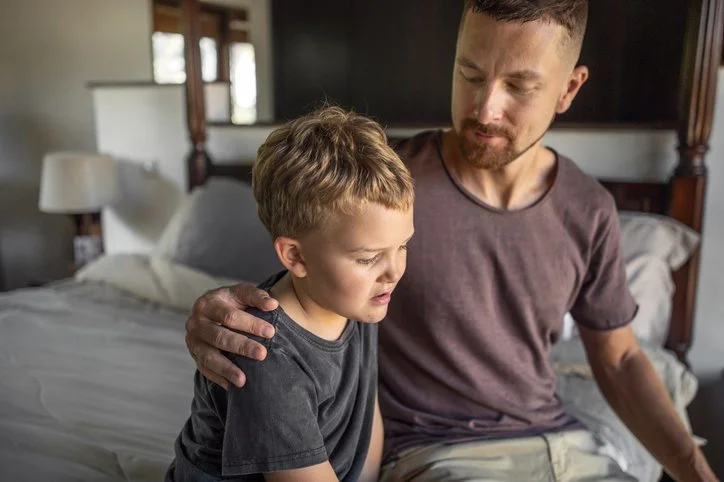
This is how emotional safety is built. This isn’t abstract. It’s built in small moments, repeated thousands of times.
Your seven-year-old comes home from school, slams his backpack on the floor, and yells that he hates his teacher. You have two choices. You can say: “Don’t talk that way. Go to your room until you can be respectful.”
Or you can say: “You seem really upset. Something happened today. Tell me about it.”
The first response teaches him that anger is unacceptable and must be hidden. The second teaches him that his feelings are worth understanding—and that there’s a safe person who wants to help him make sense of them.
Multiply that choice across ten years. Across every emotional moment of a childhood. The child in the first scenario learns to bury, suppress, disconnect. The child in the second learns that feelings are survivable, that he’s not alone with them, that someone cares what’s happening inside him.
This is how emotional safety is built. .
When Repair Becomes Harder
There is a critical truth we need to hold with care:
Early emotional attunement matters because the brain is forming, attachment patterns are wiring, and the child is learning—implicitly—whether feelings are safe or dangerous.
When those years pass without secure attachment, repair becomes harder. Not impossible—but slower, more complex, and less complete. Patterns of suppression can become deeply ingrained. Disconnection can calcify.
Without intervention, some individuals become increasingly unreachable—not because they are evil, but because their nervous systems never learned how to stay present with feeling.
This is tragedy, not destiny. But it is also reality.
The Question No Parent Wants to Face
“Love alone cannot make an unsafe person safe. Choosing survival is not abandonment—it is a heartbreaking act of clarity.”
Sometimes families confront an unbearable question:
What do you do when your adult child becomes unsafe?
Do you keep the door open, believing love will eventually break through? Or do you create distance—and live with the grief and guilt that comes with choosing safety?
There are no clean answers. Some families will need boundaries, separation, or legal protection—not because they stopped loving their child, but because love alone cannot make an unsafe person safe.
Choosing survival is not abandonment. It is a heartbreaking act of clarity.

The Warning and the Invitation
This story—like so many others—is not about villains.
It’s about a child whose feelings never had a safe place to land.
Parents who lacked tools they were never given.
And a culture that mistakes behavior management for emotional care.
The warning is this: emotional disconnection, left unaddressed, carries real risk.
The invitation is this: many children still have time.
We can learn what we weren’t taught. We can build homes where feelings are welcomed, named, and processed together. We can pay attention to the quiet child, the angry child, the numb child—not as problems to fix, but as people trying to communicate without language.
And if the window has already narrowed—if you are living with an adult child whose disconnection has become dangerous—you are allowed to protect yourself while grieving the loss of what you hoped could be.
There are no bad children. There are only people whose feelings never found safety—and families left to live with the consequences.
If there is still time, use it.
----
Joy Stephenson-Laws is a healthcare attorney, certified holistic wellness coach, and founder of Proactive Health Labs. She is the author of “From Chains to Wings: A Poetry Revolution for Healing” and the children’s book “Secrets That Sparkle (and Secrets That Sting),” which teaches children about emotional safety and the importance of trusted adults.