
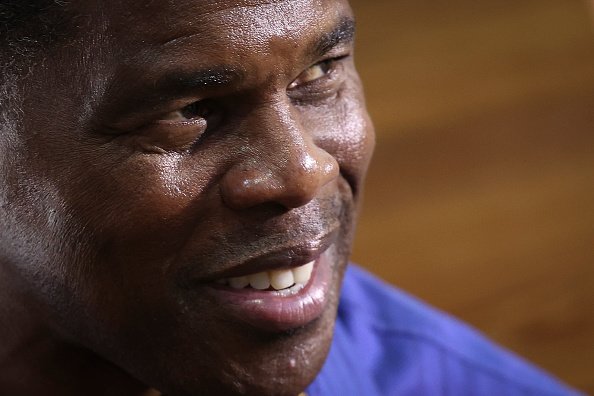
This isn't about politics. It's about what happens when a child's pain has nowhere to go.
By: Joy Stephenson-Laws, Holistic Coach, J.D., Founder
Herschel Walker is one of the greatest athletes in American football history. Heisman Trophy winner. NFL star. Olympic bobsledder. A man whose physical dominance on the field made him a legend.
He's also a man who held a gun to his wife's head and doesn't remember doing it.
In his 2008 memoir Breaking Free, Walker revealed that he has dissociative identity disorder—what used to be called multiple personality disorder. He described twelve "alters," distinct parts of himself that developed to help him cope with what he couldn't survive alone as a child.
This isn't a story about football. It's a story about what happens when a child's feelings are too overwhelming to hold—and there's no one to help them carry the weight.
The Wound
Walker describes his childhood in rural Georgia:
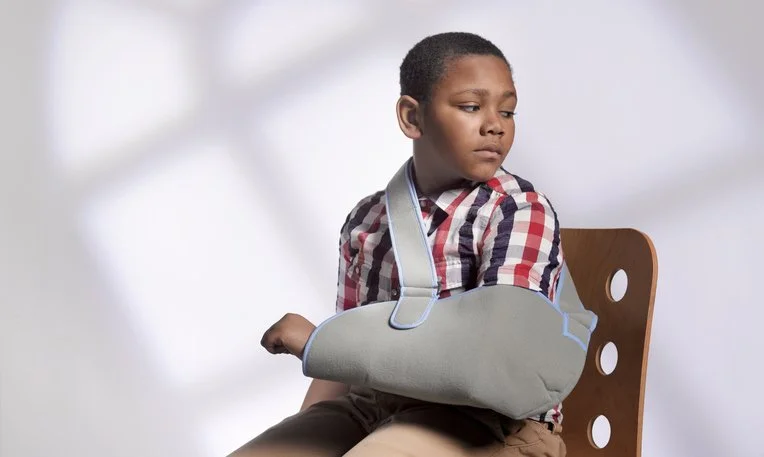
"I was a fat little kid with a severe speech impediment. I used to get beat up, not just picked on."
"I didn't love myself and I didn't know how to love myself."
He was bullied relentlessly. He was afraid to leave the classroom during recess. On the last day of eighth grade, he was assaulted while classmates laughed at his stuttering.
Where does that pain go when you're a child? When the world is unsafe and no one is helping you make sense of what you're feeling?
For Walker, the pain went underground. His mind did the only thing it knew how to do: it split.
What Is Dissociation?
Dissociation is the mind's escape hatch.
When feelings become unbearable—when the pain of what's happening is too much to experience consciously—the mind creates distance. It doesn't go somewhere else physically. It goes somewhere else internally. It numbs. It fogs over. It watches from far away. The person is still physically there—but they are gone.
You've probably experienced mild versions of this. Zoning out during a stressful conversation. Driving somewhere and not remembering the trip. Feeling like you're watching yourself from outside your body during a crisis. These are the mind's way of creating distance from overwhelm.
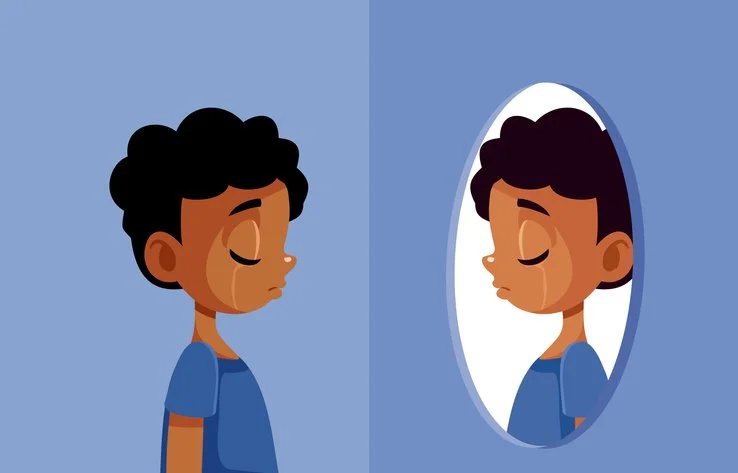
But when trauma is severe and prolonged—especially in childhood, when the brain is still forming—dissociation can become structural. The mind doesn't just create temporary distance. It splits. It creates separate parts to endure what the original self cannot.
In dissociative identity disorder, the mind creates alternate identities—often called "alters"—to hold what the child cannot carry. These parts develop their own characteristics, voices, and coping strategies. Some are protectors. Some hold rage. Some hold shame. Each one exists because the original self couldn't survive the pain intact.
Walker named his alters by their function: The Hero. The Coach. The Enforcer. The Consoler. The Warrior. The Daredevil.
These parts aren't separate people living inside one body. They are split-off aspects of a single self—fragments of identity that developed at different moments to survive different threats. Each holds specific emotions, memories, or roles because the child's nervous system couldn't integrate those experiences all at once.
And these weren't choices. They were survival.
It's also important to be clear: dissociation exists on a spectrum. Most people who experience trauma do not develop dissociative identity disorder. Many dissociate in quieter, more common ways—numbing their emotions, losing time while scrolling, zoning out during conflict, or feeling detached from their bodies under stress. DID represents one of the most extreme and rare adaptations, typically associated with chronic, overwhelming trauma during early development.
The Cost
Stories like this are unsettling—and they should be. Understanding dissociation does not excuse violence, nor does trauma inevitably lead to it. Most people who dissociate never harm anyone. But extreme disconnection can make behavior feel unowned, fragmented, and terrifying—for the person living inside it and for those around them.
Walker describes stretches of time that seemed "forever lost"—periods where his alters were in control and he had no memory of what happened. He describes rage he couldn't explain. Behavior that didn't feel like his own.
His ex-wife, Cindy Grossman, described living with a man who could shift without warning:
"There was a very sweet, lovable personality. That's the one he told me I married. He told me I didn't marry Herschel."
She also described the other side:
"The next thing I knew, he just kind of raged and he got a gun and put it to my temple."
Walker doesn't remember these events. But he doesn't deny them.
He also wrote about sitting at his kitchen table playing Russian roulette with a loaded revolver. About driving to confront a deliveryman with murder in his heart, a gun in his hand, voices arguing in his head.
This is what disconnection looks like decades later. A person whose inner world is so fragmented that different parts operate without the others knowing. A person capable of actions they may not fully understand or remember.

Same Wound, Different Path
I recently wrote about what happens when children are never taught to feel—when emotions are ignored, minimized, or treated as inconvenient. In that piece, I explored how buried feelings can lead to addiction: substances become the only tool a person has to manage an internal world that was never made safe.
Dissociation is another path from the same wound.
When feelings have nowhere to go, the mind will find a way to cope. For some, that means numbing through substances. For others, it means splitting—creating separate parts to hold what cannot be integrated. For many, it's both. The person who dissociates may also reach for drugs or alcohol to quiet the chaos of a fragmented inner world.
The paths aren't separate. They're often intertwined.
Both paths risk leading to the same destination: an adult disconnected from themselves—sometimes capable of harm they may not fully understand.
This Isn't About Blame
Walker grew up in what he describes as a "poor but loving family." His parents didn't abuse him. The trauma came from outside the home—relentless bullying, violence, humiliation.
But here's the question worth asking: Was there anyone who helped him process what was happening? Did his feelings have a safe place to land? Was there a trusted adult who sat with him in his pain and helped him make sense of it?
We don't know the answers. And this isn't about blaming Walker's parents.
It's about understanding that children cannot regulate overwhelming emotions alone. Their nervous systems aren't built for it. They need co-regulation—an adult presence that helps them feel safe enough to feel.
When that's missing, the child adapts. They have to. Dissociation, addiction, rage, numbness—these aren't character flaws. They're survival strategies that develop when no other options exist.
The Takeaway for Every Parent
You don't have to be an abuser to raise a child who dissociates or numbs or disconnects. You just have to be absent—physically or emotionally—during the moments when your child needs help carrying what they feel.
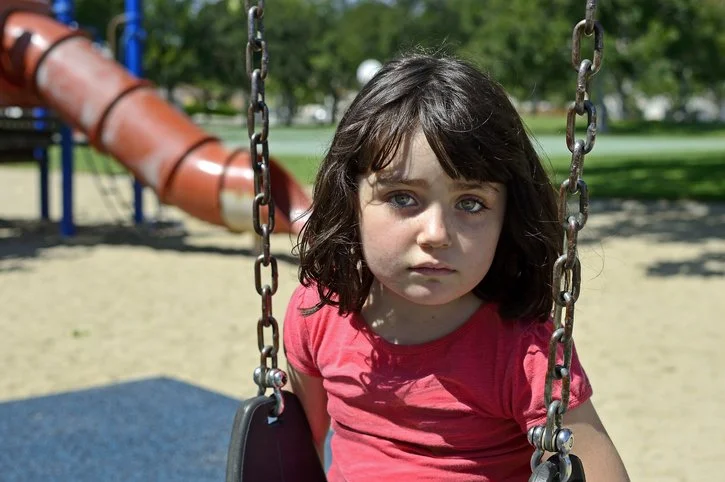
Bullying. Loss. Fear. Shame. Loneliness. These experiences happen to children every day. The question isn't whether your child will face hard things. The question is whether they'll face them alone.
When a child knows that their feelings matter—that someone sees them, names what they're experiencing, and helps them move through it—they learn that emotions are survivable. They stay connected to themselves.
When a child learns that their feelings are invisible or inconvenient, they disconnect. They have to. The pain of feeling alone with overwhelming emotions is worse than the pain of leaving yourself behind.
It's Not Too Late
Herschel Walker was in his forties before he understood what had happened to him. After years of therapy, he's spoken publicly about his journey—not to excuse his behavior, but to help others understand what disconnection creates.
"I want to do what I can to help remove the stigma of mental illness," he wrote. "To demonstrate how once it is understood, DID and the mental process of dissociation can be channeled into something positive."
If you recognize yourself in this story—if you've experienced the fog, the numbness, the feeling of watching your life from outside yourself, the stretches of time you can't account for—know this: repair is possible. It's hard. It's slow. It requires finding a therapist trained in trauma and dissociation, someone who can help you safely reconnect with the parts of yourself that split off long ago.
But people do heal. The fragments can learn to communicate. The walls between them can soften. Integration—becoming whole—is possible, even after decades.
The wound happened when you were too young to protect yourself. The healing happens when you're finally safe enough to feel what you couldn't feel then.
And for those of us raising children now, prevention matters most.
The child who is struggling—who is angry, withdrawn, numb, or acting out—is telling you something they don't have words for. The question isn't how to fix their behavior. The question is what they're feeling that has nowhere safe to go.
If you can answer that question—if you can sit with them in the hard feelings and help them know they're not alone—you may be giving them the one thing that changes everything.
A place to land.

References
Primary Source: Herschel Walker
Walker, H. (2008). Breaking Free: My Life with Dissociative Identity Disorder. Simon & Schuster.
ABC News. (2008, April 14). Herschel Walker: 'Tell the World My Truth.' Nightline. https://abcnews.go.com/Nightline/story?id=4643971
ESPN. (2008, April 14). Herschel Walker's 'truth': multiple identity disorder. https://www.espn.com/nfl/news/story?id=3346240
Dissociative Identity Disorder and Childhood Trauma
American Psychiatric Association. (2013). Diagnostic and Statistical Manual of Mental Disorders (5th ed.). Arlington, VA: American Psychiatric Publishing.
Şar, V., Dorahy, M.J., & Krüger, C. (2017). Revisiting the etiological aspects of dissociative identity disorder: A biopsychosocial perspective. Psychology Research and Behavior Management, 10, 137-150. https://www.dovepress.com/revisiting-the-etiological-aspects-of-dissociative-identity-disorder-a-peer-reviewed-fulltext-article-PRBM
Reinders, A.A.T.S., et al. (2020). Dissociative identity disorder: Out of the shadows at last? The British Journal of Psychiatry, 217(4), 513-514. https://www.cambridge.org/core/journals/the-british-journal-of-psychiatry/article/dissociative-identity-disorder-out-of-the-shadows-at-last/8E2884FA8669A9A64790E5C47AD72DC7
Chalavi, S., Vissia, E.M., Giesen, M.E., et al. (2015). Abnormal hippocampal morphology in dissociative identity disorder and post-traumatic stress disorder correlates with childhood trauma and dissociative symptoms. Human Brain Mapping, 36(5), 1692-1704.
Young, L. (2024). Dissociative identity disorder: A review of the diagnosis that divides. Progress in Neurology and Psychiatry, 28(3). https://onlinelibrary.wiley.com/doi/10.1002/pnp.834
StatPearls. (2023). Dissociative Identity Disorder. National Center for Biotechnology Information. https://www.ncbi.nlm.nih.gov/books/NBK568768/
Zakaria, H., et al. (2024). Unraveling the Layers: Dissociative Identity Disorder as a Response to Trauma. Cureus. https://pmc.ncbi.nlm.nih.gov/articles/PMC11185985/
Co-Regulation and Child Development
Bornstein, M.H., & Esposito, G. (2023). Coregulation: A multilevel approach via biology and behavior. Children, 10(8), 1323. https://pmc.ncbi.nlm.nih.gov/articles/PMC10453544/
Child Mind Institute. (2025). What Is Co-Regulation? https://childmind.org/article/what-is-co-regulation/
Porges, S.W. (2011). The Polyvagal Theory: Neurophysiological Foundations of Emotions, Attachment, Communication, and Self-Regulation. W.W. Norton & Company.
Porges, S.W. (2022). Polyvagal Theory: A science of safety. Frontiers in Integrative Neuroscience, 16, 27.
Schore, A.N. (2005). Attachment, affect regulation, and the developing right brain: Linking developmental neuroscience to pediatrics. Pediatrics in Review, 26(6), 204-217.
Attachment and Early Brain Development
Bowlby, J. (1969). Attachment and Loss: Vol. 1. Attachment. Basic Books.
Newman, L., Sivaratnam, C., & Komiti, A. (2015). Attachment and early brain development – neuroprotective interventions in infant–caregiver therapy. Translational Developmental Psychiatry, 3(1). https://www.tandfonline.com/doi/full/10.3402/tdp.v3.28647
Feldman, R., et al. (2022). Parent-child co-regulation from infancy to adolescence. Developmental Review, 63.
Additional Resources
DID-Research.org. Dissociative Identity Disorder research and education. https://did-research.org/
International Society for the Study of Trauma and Dissociation (ISSTD). https://www.isst-d.org/
This article draws on Herschel Walker's own public accounts and is intended for education and reflection, not as a clinical diagnosis or a comprehensive explanation of dissociative identity disorder.
Joy Stephenson-Laws is a healthcare attorney, certified holistic wellness coach, and founder of Proactive Health Labs. She is the author of "From Chains to Wings: A Poetry Revolution for Healing" and the children's book "Secrets That Sparkle (and Secrets That Sting)," which teaches children about emotional safety and the importance of trusted adults.