The Most Powerful Child Safety Tool Isn't a Rule — It's a Feeling:
By: Joy Stephenson-Laws, Holistic Coach, J.D., Founder
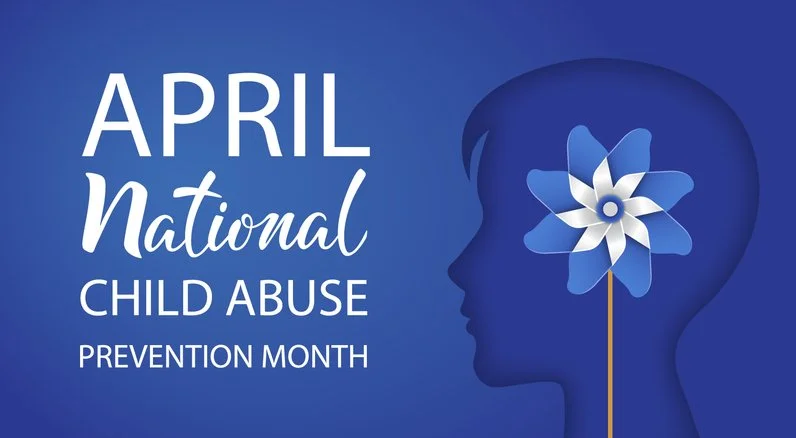
Every April, pinwheels appear on lawns, in school courtyards, and outside courthouses. They are the national symbol of Child Abuse Prevention Month — a federally recognized observance held every April since 1983, and this year carrying the theme Pinwheels of Possibility, led by Prevent Child Abuse America.
The pinwheels are beautiful. But they are not what keeps a child safe.
What keeps a child safe is harder to see, harder to legislate, and harder to teach — because it isn't a rule alone. It's a feeling. And the science on why rules alone are not enough is clearer than most parents, teachers, and caregivers realize.
The Rules We Teach, and Their Limits
For decades, well-meaning adults have given children rule-based safety instructions:
Don't talk to strangers.
Say no and tell someone.
A grown-up should never ask you to keep a secret.
These rules are useful. They are also insufficient on their own — for two reasons grounded in how children actually get harmed.
First, most child abuse is not committed by strangers. According to the federal Child Maltreatment 2023 report published by the U.S. Department of Health and Human Services, an estimated 546,159 children were confirmed victims of abuse or neglect in fiscal year 2023, and 76.0% of perpetrators were parents of the victim. The "stranger danger" frame mislocates the threat.
Second, rules require a child to notice that a rule is being broken. A child being groomed, manipulated, or coerced is often being taught — slowly, affectionately — that the usual rules don't apply here. This is our special thing. I'm not really a stranger. This isn't the kind of secret we have to tell.
A rule is a sentence. A child under pressure doesn't always recognize when that sentence has been quietly rewritten for them. Something else has to be in place underneath.
What That "Something Else" Is
Long before a child can explain what feels wrong, the body often registers that something is off.
When a child is in a situation that feels unsafe — emotionally, physically, or relationally — the nervous system responds before conscious thought. Heart rate changes. Breath gets shallow. The stomach tightens. The throat feels strange. Muscles freeze, or the child becomes unusually still, or suddenly wants to leave without knowing why.
This is the body's threat-detection system doing what it evolved to do. In the scientific literature, the broader capacity to sense internal bodily states is called interoception. In child-safety education, caregivers and therapists often give it simpler names: the uh-oh feeling, the yucky feeling, or the warning feeling.
I want to be careful here. The research on whether young children's internal signals reliably identify abuse or grooming is still developing, and nobody should promise that a child's feeling is infallible. But here is what we can say with confidence: a child who has been taught to notice that feeling, name it, and tell a trusted adult is more likely to report what happens to them than a child who has been taught only to apply a rule. The feeling doesn't replace the rules. It gives the child a reason to speak up before the rules have to be used.
What the CDC Actually Calls the Primary Protective Factor
This is not a soft claim. The U.S. Centers for Disease Control and Prevention, through its Essentials for Childhood framework, names "safe, stable, nurturing relationships and environments" as the foundational strategy for preventing child abuse and neglect. The CDC defines those three words precisely:
Safety: the extent to which a child is free from fear and secure from physical or psychological harm.
Stability: predictability and consistency in a child's social, emotional, and physical environment.
Nurturing: the extent to which a child's physical, emotional, and developmental needs are sensitively and consistently met.
A clarifying note, because this matters: the CDC framework describes the environments and relationships adults are responsible for creating. It is not a guide to what children should be taught to feel. But the two are directly connected. A child growing up inside a safe, stable, nurturing relationship is a child who develops a reliable internal reference point for what safety actually feels like — and who therefore has something to compare against when a situation doesn't match.
That internal reference point is what we are trying to build. It is what makes the rules work when the time comes.
What This Looks Like in Practice
For educators and caregivers, translating this science into practice doesn't require a new curriculum. It requires small, consistent practices that build a child's capacity to feel, name, and act on internal signals.
1. Let the body's signals be valid data. When a child says "my tummy feels funny" or "I don't want to hug them," the instinct is often to smooth it over: You're fine, go give Uncle a hug. Over years, that response trains the signal away. A more protective response: Okay — you don't have to. You can wave instead.
2. Name the feeling before reinforcing the rule. Rather than leading with never keep secrets from me, try: Some secrets feel shiny and fun — like a birthday surprise. Other secrets feel heavy or sticky inside, even if the person is nice. That heavy feeling matters. You can always tell me, and you won't be in trouble. This is the exact distinction at the heart of my picture book Secrets That Sparkle (and Secrets That Sting) — a rhyming read-aloud written with young children in mind — and it is also the distinction a child's body is already trying to make on its own.
3. Practice the pause. Between the feeling and the action, there is a pause. In my Feel–Pause–Act framework, that pause is the most teachable moment in a child's emotional life. Feel what's happening in your body. Pause long enough to notice it. Act — which, for a child, usually means telling a trusted adult.

4. Be a named, reliable adult. Ask any child, Who are three grown-ups you could tell if something felt wrong? If they can name three, they have a protective layer. If they can't, that is a gap worth closing — with teachers, school counselors, coaches, grandparents, neighbors, family friends. Prevent Child Abuse America's core message this April is that prevention is collective: strong families embedded in supportive communities. The child's safety net is literally made of named adults.
The Pinwheels Are the Metaphor. The Feeling Is the Tool.
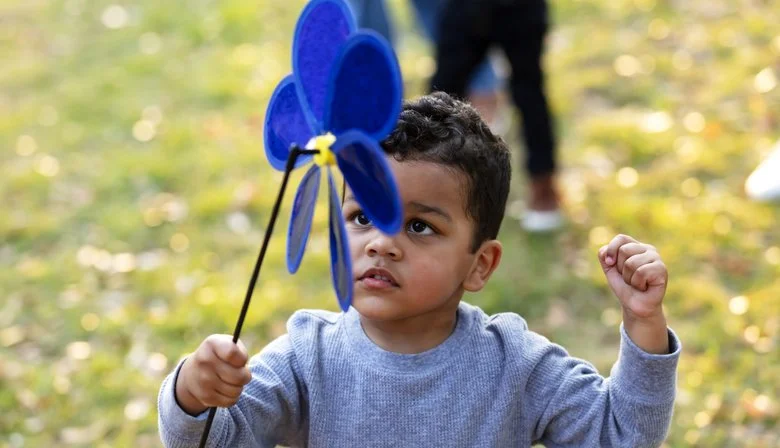
A pinwheel turns because something invisible moves it. That is the right image for this work.
The visible rules we teach children matter. But the invisible thing — the felt sense of safety, the trusted adult's steady presence, the child's permission to trust their own body — is what gives those rules somewhere to land when no adult is watching and no rule quite fits the situation.
This April, plant the pinwheel. And then, with every child in your life, practice the harder thing: help them feel the feeling, pause long enough to notice it, and know — with absolute certainty — that you will believe them when they tell you.
Go Deeper
Secrets That Sparkle (and Secrets That Sting) is a Kirkus-reviewed picture book that gives young children the language to distinguish secrets that feel light and joyful from secrets that feel heavy and wrong — and gives the grown-ups in their lives a starting point for the conversation.
Visit secretsthatsparkle.com/parents-educators to take the Are You Prepared to Protect Your Child? assessment, download the free Secrets That Sparkle Action Plan for parents and caregivers, and access a quick-reference reporting and support sheet.
(Joy Stephenson-Laws is the author of "Secrets That Sparkle (and Secrets That Sting): A Rhyming Picture Book for Ages 5+." The book helps children tell the difference between fun secrets and harmful ones, giving them the power to speak up when something doesn't feel right).
Resources for Educators and Caregivers
For crisis guidance, questions, or how to report. The Childhelp National Child Abuse Hotline offers confidential, 24/7 crisis counseling, support, and referrals in over 170 languages. Crisis counselors can walk you through how to make a report if you suspect a child is being harmed. Note: the hotline itself is not a reporting line and is not connected to emergency services — for immediate danger, call 911. Call or text 1-800-422-4453 (1-800-4-A-CHILD), or chat at childhelphotline.org.
For learning how to prevent and respond.Darkness to Light's Stewards of Children® is the most widely recognized evidence-informed child sexual abuse prevention training for adults in the United States, refreshed most recently in 2023. The 2.5-hour training teaches adults how to prevent, recognize, and respond responsibly to child sexual abuse. Available online and through local facilitators nationwide at d2l.org.
For the national prevention framework and April campaign.Prevent Child Abuse America leads the Pinwheels for Prevention® campaign and is the coordinating organization for Child Abuse Prevention Month. Resources, local chapter finder, and the 2026 Pinwheels of Possibility campaign materials at preventchildabuse.org.
For the public-health evidence base. The CDC's Child Abuse and Neglect Prevention page houses the Essentials for Childhood framework and the Adverse Childhood Experiences (ACEs) Prevention Resource for Action, both of which inform current best practice for building safe, stable, nurturing environments for children. Available at cdc.gov/child-abuse-neglect.
For reporting suspected online exploitation of a child. The CyberTipline at the National Center for Missing & Exploited Children is the federally designated reporting system for suspected online child sexual exploitation. Report at report.cybertip.org or call 1-800-843-5678 (1-800-THE-LOST).