
Hyperbaric Oxygen Therapy for Nervous System Healing: A Trauma-Informed look
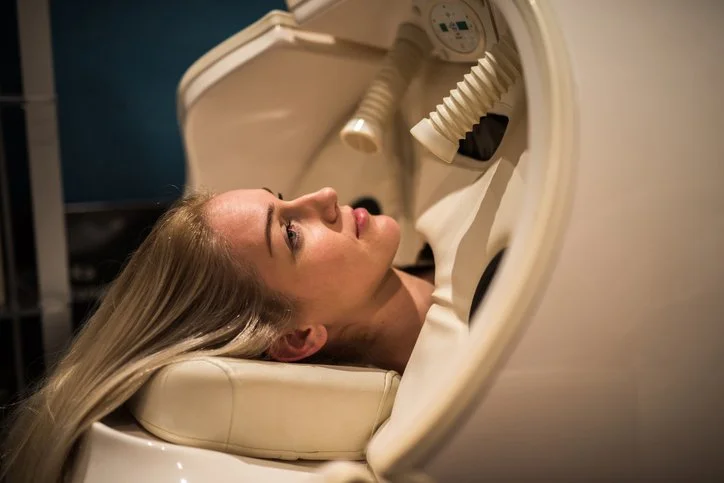
By: Joy Stephenson-Laws, Holistic Coach, J.D., Founder
If you have read anything about hyperbaric oxygen therapy lately, you have probably seen big promises. It gets described as a fix for almost everything, from aging to anxiety to brain fog. Some of that is hope running ahead of the evidence. So before we talk about where this therapy might genuinely help, let's be honest about what it is, what it is actually proven to do, and where the science is still unsettled.
That honesty matters, because the most useful thing I can give you is not enthusiasm. It's a clear picture you can make your own decisions from.
What HBOT Actually Is
Hyperbaric oxygen therapy means breathing oxygen inside a sealed chamber where the air pressure is raised above normal. The higher pressure lets your blood and tissues carry more oxygen than they could at sea level. That extra oxygen is the whole point. The idea is that tissues starved of oxygen, or struggling to repair, get more of what they need to heal.
That's the mechanism in plain terms. Everything else is a question of which conditions respond, at what pressure, and how strong the proof is.
What HBOT Is Proven to Do
There is a short list of conditions where hyperbaric oxygen is well established and FDA-cleared. These include carbon monoxide poisoning, decompression sickness (the diver's "bends"), serious non-healing wounds such as diabetic foot ulcers, radiation injury to tissue, certain severe infections, crush injuries, and air or gas bubbles in the blood.
For these uses, the therapy is delivered in medical chambers, usually with 100% oxygen at clinical pressures, under supervision. This is real medicine with decades of evidence behind it. If you ever see hyperbaric oxygen marketed as a cure for cancer, autism, or diabetes, that is exactly the kind of claim the FDA has publicly warned against, because it is not supported and it can lead people to delay treatments that work.
So when we step outside that proven list, I want to be upfront: we are now in the territory of promising but unsettled.
Where the Brain Evidence Is Most Interesting
The reason hyperbaric oxygen keeps coming up in conversations about the nervous system is that researchers have been studying it for three brain-related conditions in particular: traumatic brain injury, persistent post-concussion symptoms, and post-traumatic stress disorder.
The thinking is that a brain injured by impact, or a nervous system worn down by prolonged stress, may have areas that are alive but underactive, getting enough oxygen to survive but not enough to function well. Several studies suggest that repeated sessions of hyperbaric oxygen at clinical pressures, usually in the range of 1.5 to 2.0 atmospheres on pure oxygen, may help some of those areas recover, with improvements in memory, thinking, and symptoms.
This isn't abstract for me. My own child used hyperbaric oxygen at around 2.0 atmospheres to recover after a fifth concussion, and came away feeling it had helped.
Some trials have shown real benefit. A 2013 randomized trial in people with lingering post-concussion symptoms years after a mild brain injury reported meaningful gains. Trials in veterans with treatment-resistant PTSD have reported symptom improvement, and a 2024 systematic review concluded the therapy shows efficacy for PTSD at adequate doses.
But other trials point the other way. Some of the most carefully blinded military studies found no advantage over a control chamber, with people improving about the same whether or not they got the active treatment. These weren't always testing the same thing, though: one of the most-cited null trials delivered oxygen at a higher pressure, 2.4 atmospheres, than the 1.5 to 2.0 range where the encouraging results cluster.
I hold my own family's experience to that same standard. My child felt better, and I'm grateful for it. But one person feeling better, mine included, can't tell you whether the oxygen did the work or whether time, rest, and the body's own healing did. That's the whole problem with this kind of evidence, and it's why the trials matter more than any single story, including my own.
There is an active, unresolved scientific argument about why. Supporters of the therapy make two points: that the "sham" chambers used mild pressure that may itself be a low active dose, so both groups improved, and that 2.4 atmospheres may simply be too high, past the window where the lower 1.5 to 2.0 doses seem to help. Skeptics counter that the trials were properly controlled and just show the therapy doesn't beat placebo. Both camps include serious researchers. It's worth knowing that many of the strongly positive studies come from a small number of clinics with a financial stake in the therapy, while the null results tend to come from independent military-funded trials.
What does that leave us with? A reasonable, honest summary: hyperbaric oxygen for brain injury, concussion, and PTSD is a legitimate area of research with some encouraging results and some disappointing ones. It is not settled, it is not FDA-cleared for these uses, and anyone who tells you it definitely works is overstating the case.
How It Might Work
When researchers look at why hyperbaric oxygen could help an injured brain, a few mechanisms come up. The extra oxygen may support cellular energy production. It may calm inflammation. It may encourage the growth of new blood vessels and support the brain's ability to rewire, what scientists call neuroplasticity.
I want to flag the size of the evidence here. Much of the mechanism research comes from animal and laboratory studies, including mouse models and isolated human cells, often at clinical pressures of 2.0 atmospheres or higher. That work is genuinely interesting, and it gives us plausible reasons the therapy might help. It is not the same as proof that it changes outcomes for a person sitting in a chamber. Keep those two things separate when you read bold claims.
The Part About Feeling Safe
Many people describe a hyperbaric session as calming. Their breathing slows. Their shoulders drop. The constant low hum of alertness quiets down for a while.
I take that experience seriously, because feeling safe in your body is where a lot of healing begins. But I want to be careful about what causes it. Lying still in a quiet, enclosed space for an hour, with nothing to do and nowhere to be, is calming for most people whether or not the oxygen is doing anything measurable. One small study in divers found that hyperbaric oxygen shifted the nervous system toward its "rest and restore" branch, but that was a narrow study at high pressure, not proof that a wellness session resets your stress response.
So here is how I'd frame it, honestly. The calm you may feel in a chamber is real and worth something. It can make it easier to do the harder work of healing, especially the emotional work you do with a therapist or counselor. Think of it as a supportive setting rather than the thing doing the healing. The therapy supports the inner work. It does not replace it, and the felt sense of calm is not, by itself, evidence that your brain chemistry changed.
That distinction protects you from spending a lot of money chasing a feeling and calling it a cure.
Does the Type of Chamber Matter?
Yes, and this is where a lot of confusion lives.
The brain research I described above, the trials at roughly 1.5 to 2.0 atmospheres on pure oxygen, was done in rigid medical-grade chambers under clinical protocols. Those are the conditions that have actually been studied.
The soft, low-pressure chambers you find in many wellness centers operate at much lower pressure, often around 1.3 atmospheres, frequently with ordinary air or a concentrator rather than pure oxygen. They are gentler and more comfortable, which some people prefer, especially if enclosed spaces make them anxious. But you should know that the encouraging brain studies were generally not done at this pressure. Claims that a soft 1.3-atmosphere chamber reduces brain inflammation or repairs cells are borrowing evidence from higher-pressure clinical research and applying it to a setting where it hasn't been demonstrated. The comfort is real. The proof at that pressure is thin.
If a provider tells you a soft chamber delivers the same benefits as the clinical research, that's a claim worth questioning.
Safety, and Why It Deserves a Section of Its Own
Hyperbaric oxygen is generally safe when it's done properly, at an accredited facility, for an appropriate reason. But it is not risk-free, and the wellness-marketing version of this therapy almost never mentions that. Here is what an honest conversation includes.
The most common side effect is pressure-related discomfort in the ears and sinuses, the same feeling you get on a descending airplane, which can cause real injury if you can't equalize. Breathing high concentrations of oxygen under pressure can, in rare cases, trigger seizures, which is one reason clinical chambers follow strict dose and timing protocols. Enclosed chambers can feel claustrophobic or activating, which matters a great deal if you have a trauma history. And because oxygen feeds fire, a high-oxygen chamber carries a fire risk. Reputable, accredited facilities manage this carefully. Homemade and unaccredited setups have caused fires and injuries, which is part of why regulators warn about them.
Certain conditions make hyperbaric oxygen unsafe, including some lung conditions such as an untreated collapsed lung, and certain medications. Pregnancy, recent ear surgery, and some chronic illnesses call for caution. This is not a complete list, and that's the point: it's why a real medical evaluation comes first, not a quick intake form at a spa.
One more thing, because I see it often. More is not better. Chasing a calm feeling with session after session, outside of a clinical protocol, is not a wellness strategy. If you decide to try this therapy, do it with a qualified provider who can tell you how many sessions are reasonable and when to stop.
The Bottom Line
Hyperbaric oxygen therapy is proven and valuable for a specific set of medical conditions. For brain injury, concussion, and PTSD, it is a real and active area of research with mixed results, promising enough to take seriously, unproven enough that you should keep your expectations honest and your wallet cautious. For general "nervous system healing" or emotional repair, the evidence is not there yet, and the calm you may feel in a chamber, while genuine, is not the same as a cure.
If you're considering it, my advice is simple. Talk with a qualified healthcare provider who isn't selling you the sessions. Ask what the realistic evidence is for your specific situation. Choose an accredited facility. And treat it as one possible support for your healing, alongside the slower, deeper work, not as a shortcut around it.
That's not a no. It's an honest yes-with-eyes-open, which is the only kind worth giving.
(This article is for educational purposes only and is not medical advice. If you're considering hyperbaric oxygen therapy, please talk with a qualified healthcare provider).
References
1. Bin-Alamer O, Abou-Al-Shaar H, Efrati S, Hadanny A, Beckman RL, Elamir M, Sussman E, Maroon JC. Hyperbaric oxygen therapy as a neuromodulatory technique: a review of the recent evidence. Frontiers in Neurology. 2024;15:1450134.
2. Boussi-Gross R, Golan H, Fishlev G, Bechor Y, Volkov O, Bergan J, Friedman M, Hoofien D, Shlamkovitch N, Ben-Jacob E, Efrati S. Hyperbaric oxygen therapy can improve post concussion syndrome years after mild traumatic brain injury — randomized prospective trial. PLoS One. 2013;8(11):e79995.
3. Wolf G, Cifu D, Baugh L, Carne W, Profenna L. The effect of hyperbaric oxygen on symptoms after mild traumatic brain injury. Journal of Neurotrauma. 2012;29(17):2606–2612.
4. Doenyas-Barak K, Catalogna M, Kutz I, Levi G, Hadanny A, Tal S, et al. Hyperbaric oxygen therapy improves symptoms, brain's microstructure and functionality in veterans with treatment-resistant post-traumatic stress disorder: a prospective, randomized, controlled trial. PLoS One. 2022;17(2):e0264161.
5. Andrews SR, Harch PG. Systematic review and dosage analysis: hyperbaric oxygen therapy efficacy in the treatment of posttraumatic stress disorder. Frontiers in Neurology. 2024;15:1360311.
6. Marcinkowska AB, Mankowska ND, Kot J, Winklewski PJ. Impact of hyperbaric oxygen therapy on cognitive functions: a systematic review. Neuropsychology Review. 2022;32(1):99–126.
7. Shapira R, Solomon B, Efrati S, Frenkel D, Ashery U. Hyperbaric oxygen therapy ameliorates pathophysiology of 3xTg-AD mouse model by attenuating neuroinflammation. Neurobiology of Aging. 2018;62:105–119.
8. Tezgin D, Giardina C, Perdrizet GA, Hightower LE. The effect of hyperbaric oxygen on mitochondrial and glycolytic energy metabolism: the caloristasis concept. Cell Stress and Chaperones. 2020;25(4):667–677.
9. Lund V, Kentala E, Scheinin H, Klossner J, Sariola-Heinonen K, Jalonen J. Hyperbaric oxygen increases parasympathetic activity in professional divers. Acta Physiologica Scandinavica. 2000;170(1):39–44.
10. U.S. Food and Drug Administration. Hyperbaric Oxygen Therapy: Get the Facts. FDA Consumer Update. July 26, 2021.