
Why You Can't "Think Positive" Your Way Through Grief—And What Actually Works
By: Joy Stephenson-Laws, Holistic Coach, J.D., Founder
You've tried everything.
You've counted your blessings. Reminded yourself that others have it worse. Kept busy. Pushed through. Told yourself to be grateful for what you still have.
And yet the grief is still there. The loneliness still creeps in at 2 a.m. The heaviness still shows up when you least expect it—in the grocery store, during a song, in the middle of an ordinary Tuesday.
Here's what no one told you: You can't think your way out of grief because grief doesn't live in your thoughts. It lives in your body. And until you understand that, real healing stays just out of reach.
The Lesson You Learned Before You Had Words For It
Long before you experienced your first real loss, you learned something about feelings.
Maybe you cried as a child and heard, "Stop that crying or I'll give you something to cry about." Maybe you got angry and were told, "Don't you raise your voice at me." Maybe sadness was met with, "What do you have to be sad about?"
If you were a boy, you probably heard some version of "man up." If you were a girl, maybe it was "you're being dramatic" or "don't be so sensitive."

These messages seemed normal. Everyone heard them. But here's what they actually taught your nervous system: Some feelings are dangerous. Hide them.
So you did. You learned to smile when you wanted to cry. To go quiet when you wanted to scream. To say "I'm fine" when you were falling apart inside.
That was decades ago. But your body never got the update that it's safe now.
Why the Old Patterns Keep Running
Fast forward to today.
Your partner says something hurtful, and instead of telling them, you swallow it. Your family makes plans without asking you, and you tell yourself it's not worth mentioning. Your doctor rushes through your appointment, but you don't want to be "that patient."
Or you're at a funeral, and someone says, "At least they're in a better place," and everything in you wants to scream, But I'm NOT in a better place! Instead, you nod politely.
This isn't weakness. It's programming.

Your body learned young that showing real emotion led to rejection, punishment, or shame. And your nervous system—the part of you that runs on autopilot—still believes it. So every time a big feeling comes up, it hits the brakes before you even realize what's happening.
That's why you feel numb sometimes. That's why grief gets stuck. Your body is trying to protect you from a danger that no longer exists.
The Missing Ingredient: Feeling Safe Enough to Feel
Healing from grief requires something most people never talk about: emotional safety.
Emotional safety doesn't mean being happy. It means your body believes, deep down, that you can feel pain without being destroyed by it. That you can cry without being judged. That you can admit you're struggling without losing love.
When your body feels emotionally safe, something shifts. Your shoulders drop. Your breathing slows. The knot in your chest loosens. You can finally feel what's been waiting to be felt.
This isn't some new-age concept. It's biology.
What's Actually Happening in Your Brain
Your brain has a built-in alarm system called the amygdala. Its job is simple: scan for danger. When it senses a threat—including the threat of emotional overwhelm—it floods your body with stress hormones. Heart races. Muscles tighten. You go into survival mode.
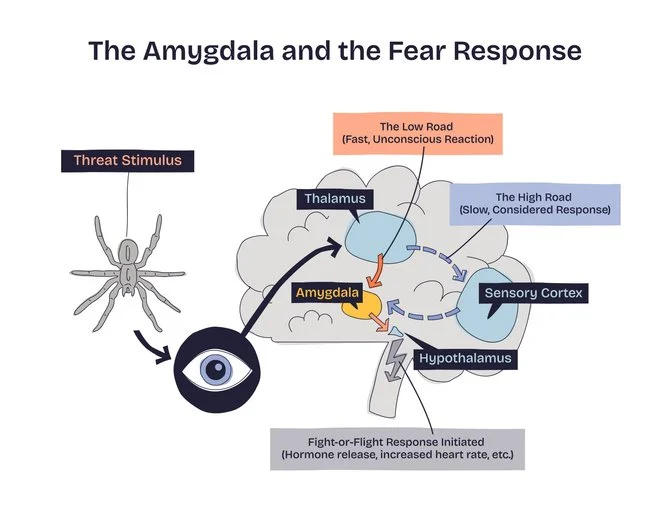
But here's the key: your amygdala can't tell the difference between a physical threat and an emotional one. If feeling sad got you criticized as a kid, your brain filed "sadness" under "danger." Now, every time grief surfaces, your alarm system sounds.
When you feel safe, the opposite happens. Your vagus nerve—the body's calming system—kicks in. Heart rate slows. Blood pressure drops. The thinking part of your brain comes back online. You can finally process what happened instead of just surviving it.
That's where healing happens. Not in pushing through. In settling down.
Feeling Isn't the Same as Falling Apart
Here's what emotional safety is not: letting every feeling run the show.
You can feel furious without screaming at someone. You can feel devastated without falling apart completely. You can feel lonely without isolating yourself.
Emotional safety gives you space to feel fully—and then choose how you respond. That's different from what most of us learned, which was to shut feelings down before they became "too much."
Suppression isn't strength. It's just a delay.
Why "Positive Thinking" Makes It Worse
When someone tells you to "look on the bright side" while you're grieving, it doesn't help. Often, it makes things worse. Because what your nervous system hears is: This feeling isn't allowed.
That's the same message you got as a child. And it sends your body right back into hiding.
Real healing isn't about replacing painful feelings with positive ones. It's about allowing the painful ones to exist without your body going into crisis mode about it.
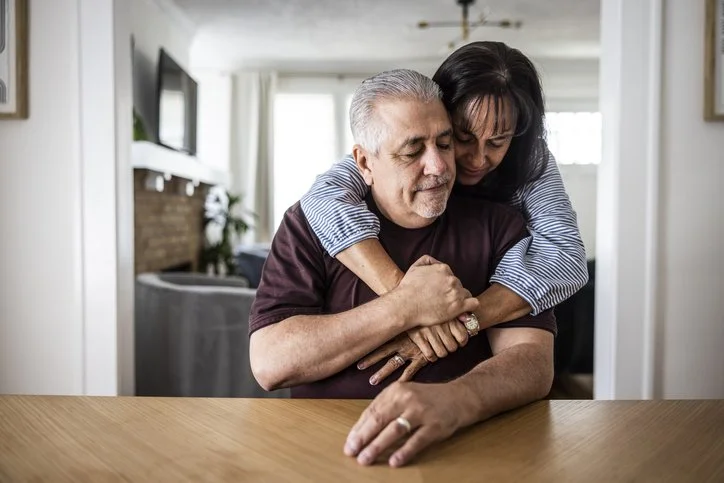
When you stop being afraid of your own grief, it finally gets a chance to move.
How to Build Safety in Your Body
Emotional safety isn't something you find. It's something you build—one small moment at a time.
Notice without judging. When a feeling shows up, try saying "I feel sad" instead of "I shouldn't feel this way."
Name it to tame it. Research shows that simply labeling an emotion—"this is grief," "this is loneliness"—calms your brain's alarm system.
Pause before reacting. One slow breath. Feet on the floor. This interrupts the autopilot response and gives you choice.
Find people who can just listen. Not fix. Not advise. Just witness. This might be a friend, a support group, or a therapist.
Use your body. When emotions overwhelm you, physical sensation brings you back: hold something warm, feel your hands on a solid surface, step outside.
Each time you do this, you're teaching your nervous system a new truth: it's safe to feel.
This Isn't Just Emotional—It's Physical
Stuffing down emotions doesn't just hurt psychologically. Chronic emotional suppression contributes to high blood pressure, weakened immunity, and inflammation. It disrupts sleep. It makes pain worse.
Letting yourself feel isn't self-indulgent. It's health care.
What Healing Actually Looks Like
Healing doesn't mean you stop feeling grief. It means grief stops controlling you.
It means you can miss someone without your whole body clenching up. You can feel lonely without panicking. You can have a hard day without it confirming that something is wrong with you.
You've loved deeply enough to grieve deeply. That's not a flaw. That's the price of a life that mattered.
The feelings were never the problem. The fear of them was.
And that can change—at any age, from any starting point.
Healing is possible. Even from grief you've carried for years.

Joy Stephenson-Laws, J.D., is a healthcare attorney with over 40 years of experience championing fairness in the healthcare system. She is the founder of Proactive Health Labs (pH Labs), a national non-profit that now embraces a holistic approach to well-being—body, mind, heart, and spirit. As a certified holistic wellness coach, she helps individuals and families create practical, lasting health strategies. Her own experiences as a mother inspired her to write resources that spark important conversations about safety and wellness.
She is the author of Minerals – The Forgotten Nutrient: Your Secret Weapon for Getting and Staying Healthy.Her children’s book, Secrets That Sparkle (and Secrets That Sting), empowers kids to recognize safe vs. unsafe secrets in a gentle, age-appropriate way.
Her latest book, From Chains to Wings, offers compassionate tools for resilience, healing, and emotional freedom.