Human Dysmorphia: The War We Wage Against Our Own Design

By: Joy Stephenson-Laws, JD, Founder and President
You've probably heard of body dysmorphia — the condition where someone sees a distorted reflection. They perceive flaws that aren't there, or magnify small ones into something unbearable.
But what if we're all living with a different kind of dysmorphia? Not about our bodies, but about our humanity itself.
I call it human dysmorphia — the distorted image we carry of what a "functional" human is supposed to look like. Composed. Unaffected. Rational. Productive. In control.
I know this distortion intimately because I lived inside it for decades.
The Lessons I Absorbed
I grew up learning that feelings were to be avoided. Stiff upper lip. Don't make a fuss. Handle it. The people I admired most were the ones who seemed unshakable — and I wanted to be like them.
When hard things happened, I reached for spiritual explanations: Everything happens for a reason. It was meant to be. And while there's truth in that, I see now how I also used it to skip over what I actually felt. If it was "meant to be," I didn't have to grieve it. I could rise above. Move on. Stay composed.
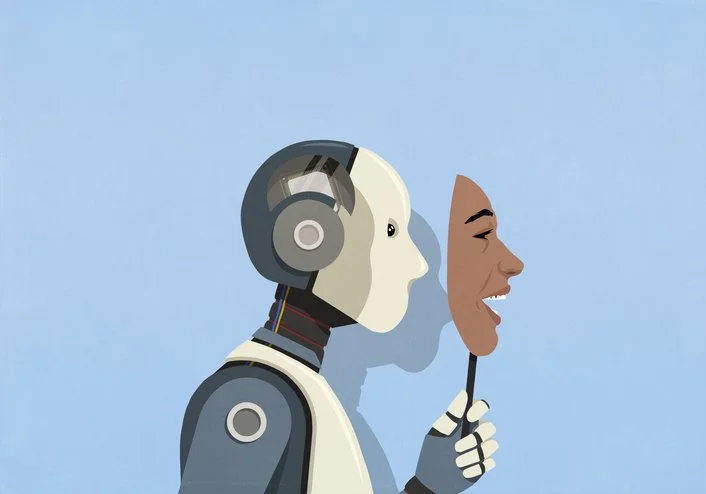
I didn't realize I was at war with my own design.
We Were Designed to Feel
Here's what I've come to understand: we are the species designed to feel.
Emotions aren't a software glitch. They're the operating system. Fear tells us something needs attention. Grief honors what we've lost. Anger signals a boundary has been crossed. Joy tells us we're aligned.
Feeling is not a flaw in our design. It is the design.

And yet we've collectively decided that the very thing that makes us human is the thing we should override, manage, medicate, or push through.
The Distortion in Action
Watch how it plays out:
You cry and immediately apologize. You feel anxious and call yourself weak. You're exhausted and push through anyway, calling it discipline. You feel angry and swallow it, calling it maturity.
This is human dysmorphia — the belief that something is wrong with you for feeling, when feeling is your humanity working exactly as intended.
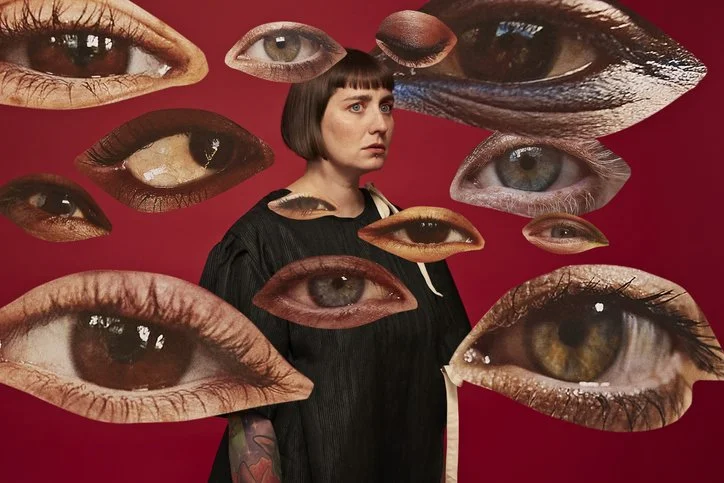
We've developed an image of the ideal human that is, quite literally, inhuman. And then we shame ourselves for failing to become it.
The Cost
Those suppressed feelings don't disappear. The science is clear.
What you don't process gets stored. It shapes your nervous system, your digestion, your immune function, your hormones. Suppressed emotions show up as chronic tension, unexplained symptoms, inflammation, and disease.
The body keeps the score, as Bessel van der Kolk wrote. But while the body is keeping score, the culture keeps telling you the body is wrong.
And the cost isn't only physical. When you override what you feel long enough, you lose access to your own inner compass. You stop knowing what you actually want, what you actually believe, who you actually are underneath all the performing.
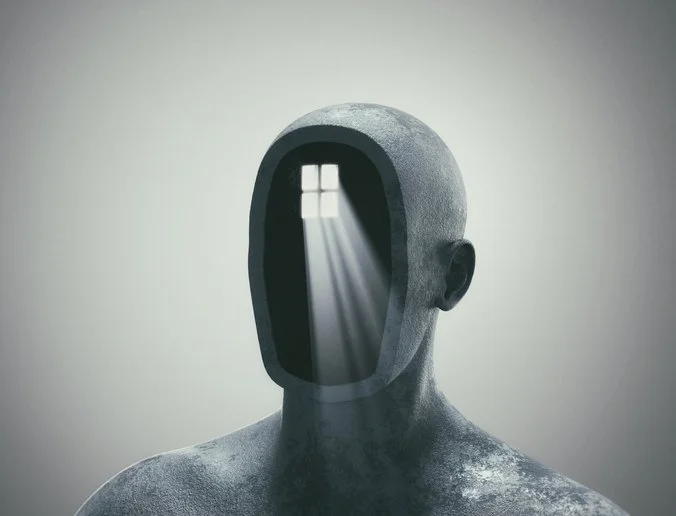
You become a curated version of yourself. Acceptable. Functional. Hollow.
That's the spiritual cost. Not just dysregulation — disconnection from your own soul.
Reframing the Problem
The power of naming this "dysmorphia" is that it puts the problem where it belongs.
It's not that something is wrong with you for feeling. Something went wrong with the image you were handed of what you're supposed to be.
You're not broken. You were given a broken mirror.
Coming Home
So much of what we call illness and dysfunction is simply the cost of fighting our own design.
For me, the shift started when I stopped treating my feelings as obstacles and started treating them as information. Not something to rise above. Something to move through.
The pattern I was taught — suppress, override, perform — kept me functional but disconnected. The pattern I practice now is different:
Feel what's actually there. Pause to let the nervous system do its work. Act from a grounded place.
Not suppress-override-perform. Feel-pause-act.
This isn't about becoming emotional or reactive. It's about returning to our design — and trusting that the feelings we were taught to fear are actually the way back to ourselves.
What if you stopped apologizing for your tears? What if exhaustion was information, not weakness? What if everything that was "meant to be" could also be grieved?
You were designed to feel. That's not the problem. That's the way back.

Joy Stephenson-Laws, J.D., is a healthcare attorney with over 40 years of experience championing fairness in the healthcare system. She is the founder of Proactive Health Labs (pH Labs), a national non-profit that now embraces a holistic approach to well-being—body, mind, heart, and spirit. As a certified holistic wellness coach, she helps individuals and families create practical, lasting health strategies. Her own experiences as a mother inspired her to write resources that spark important conversations about safety and wellness.
She is the author of Minerals – The Forgotten Nutrient: Your Secret Weapon for Getting and Staying Healthy.Her children’s book, Secrets That Sparkle (and Secrets That Sting), empowers kids to recognize safe vs. unsafe secrets in a gentle, age-appropriate way.
Her latest book, From Chains to Wings, offers compassionate tools for resilience, healing, and emotional freedom.