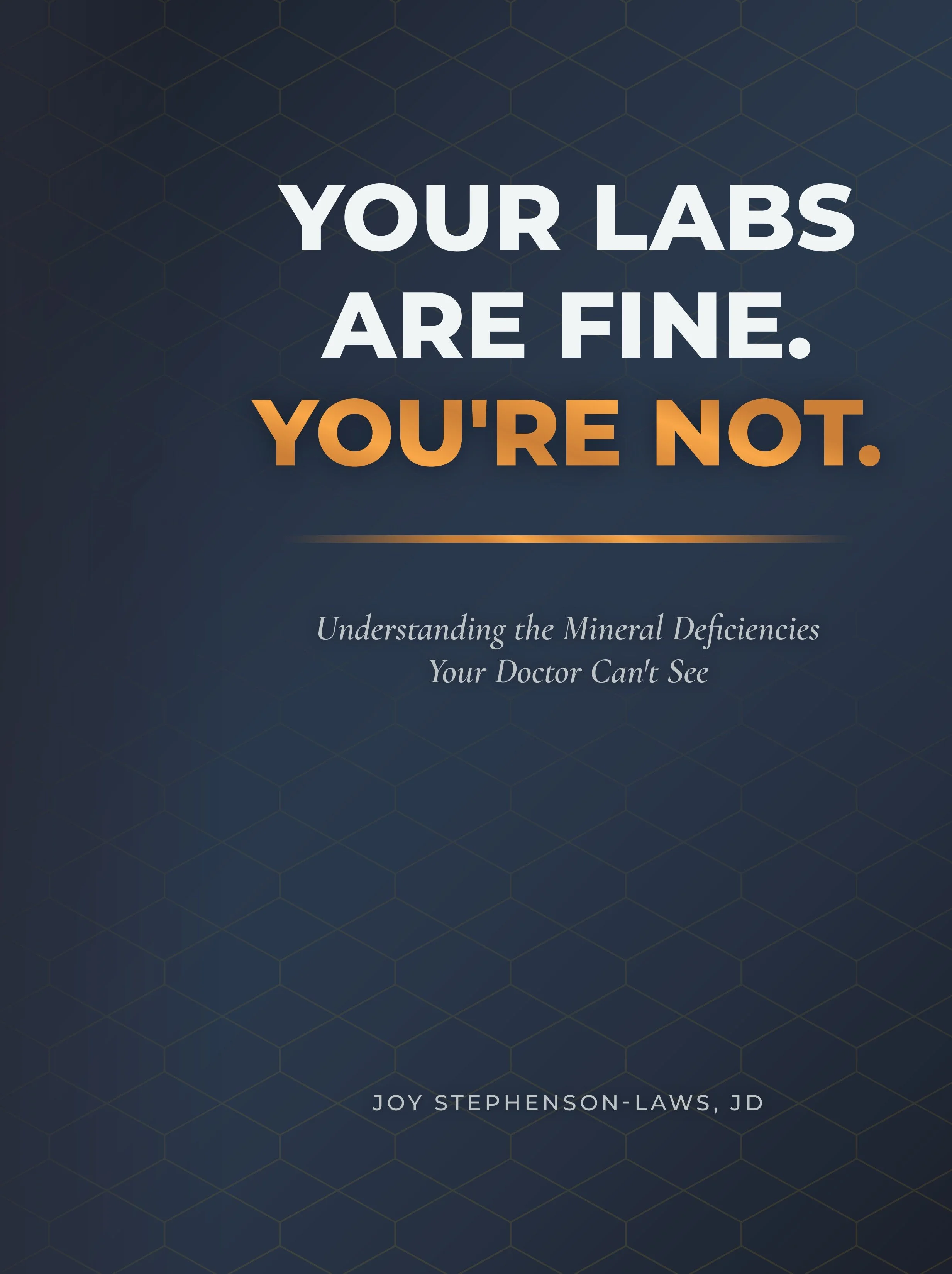
How Was Your Labs Are Fine. You're Not. Made?
By: Joy Stephenson-Laws, JD, Founder and President
Your Labs Are Fine. You’re Not. began as as something else. In October 2025, I set out to actually write a second edition of Minerals: The Forgotten Nutrient, the book I published with three physicians in 2017. I contemplated this task for about 3 years but just wrote blogs/articles which you will find in the The Learning Lab. I got as far as a full plan: keep the original chapters, update the science, add a new practical section on testing, supplements, food, and how to talk to your doctor.
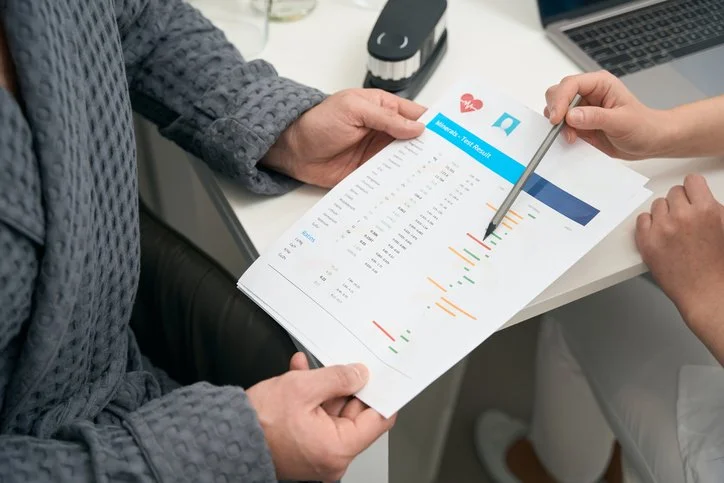
Then I looked at the practical section and realized it was the only part I actually wanted to write. People never ask me what calcium does. They say their bloodwork came back normal and they still feel terrible, and nobody can tell them why.
So I dropped the encyclopedia. The mineral-by-mineral chapters, the survey of every condition, all the material that made the first book a reference volume. What was left was the practical section, and that is what I built this book out of. By late November 2025, it had the shape you are holding: four parts, eighteen chapters, ending with what to do when things do not go as planned.
Where the material comes from
I have been researching and writing about minerals and proactive health at phlabs.org/education for about a decade. Hundreds of articles. For example, if you go back through that archive you will find pieces from 2017 and 2018 on magnesium and pain, on what diuretics do to your potassium, on the minerals that matter for depression. Those articles are the foundation of Chapters 8, 11, and 15. This book is where that decade of research and writing finally got organized into something you can follow start to finish.
How I checked it
Nobody researches in a library anymore. I work in the medical literature the way everyone does now, through PubMed and the databases.
Forty years as a healthcare attorney gave me the other half of it. I have spent my career reading medical records, and records are where you see what actually happens to people. You see the patient whose labs are normal and who is still sick. You see how much of the outcome turns on the conversation in the room, and how a patient who does not understand their own health cannot have that conversation, so the care they get is limited by what they were able to ask for. That is the gap this book is trying to close.
Appendix A is the set of references I judged to most strongly support what this book says. All of them have been validated as of this printing. Every one was checked: does the article exist, does the identifier point to the paper I think it does, are the authors right, does the study actually support the sentence it is attached to.
How it was written
I wanted this to read at the level of an ordinary conversation. The 2017 book was written for people who wanted the full science, and it reads that way. This one is written for someone who is exhausted at two in the afternoon and needs to know what to ask for. It was reviewed to confirm it stays at that level all the way through, and that it deliberately has the same or similar format from Chapter 1 to Chapter 18.
All medical content was reviewed by Dr. Pauline Jose, who has been with Proactive Health Labs since the beginning.
About the tools
I used software throughout. It organized the material the way I told it to because my goal was a book that was not verbose and was easy to follow. It double-checked my references against the databases to confirm accuracy and reduce human error. It produced the page layouts and the format previews exactly as I requested so the designer had a clear path to follow. That is what let one person hold a 316-page book to a consistent reading level and stand behind all 95 references in it.

What the software did not do is decide what this book says. The ideas and the content came out of a decade of my own knowledge and writing.
Joy Stephenson-Laws, JD, is the founding and managing partner of Stephenson, Acquisto & Colman, a healthcare litigation firm, and the founder and president of Proactive Health Labs, a national nonprofit focused on evidence-based health literacy. A healthcare attorney for more than forty years and a certified holistic wellness coach, she writes about how people can partner with their doctors without surrendering their own judgment.
Her books include Your Labs Are Fine. You're Not., Advice on Trial: The Beliefs You Inherited but Never Examined, From Chains to Wings: A Poetry Revolution for Healing, Secrets That Sparkle (and Secrets That Sting), and Minerals: The Forgotten Nutrient.