What I noticed about the help I turn down
By: Joy Stephenson-Laws, JD, Founder and President
I have noticed this about myself. When someone is at my house for dinner and offers to help with the dishes or the cooking, my usual answer is, “I’ve got it.” I have answered that way all my life. I am only now noticing it, because it was on autopilot.
There is another conversation I usually hear at this time of year, with family around. It is about someone else, and it is usually in a lowered voice.
She can’t do anything without somebody helping her.
I put both on trial in my next book, Power on Trial: the help I turn down, and the help someone else is judged for taking. One of its ten counts asks a question that suits this holiday: is it in my power to supply everything I need?
One man set out to live by his own work and wrote down how it went.
A man who kept the receipts
In 1845 Henry David Thoreau built a house by Walden Pond. He later wrote that while he lived there he “earned [my] living by the labor of [my] hands only.”
He also kept accounts, and he published them. For his first eight months at the pond he listed the food he had bought: rice, molasses, rye meal, Indian meal, pork, flour, sugar, lard, apples, dried apple, sweet potatoes, one pumpkin, one watermelon and salt. Then he wrote, “Yes, I did eat $8.74, all told.”
He says the total leaves out the potatoes, corn and peas he grew himself. So every item on that list came from someone else. On the same pages he notes that his washing and mending “for the most part were done out of the house.”
Thoreau’s own table shows that a man living by the labor of his hands was eating food other people had grown.
Count your own table
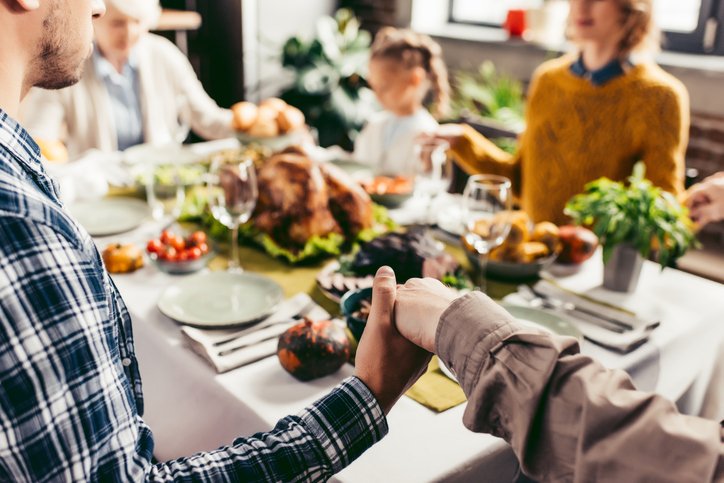
Try his count on Thursday. Someone grew the pumpkin and the apples, as someone did for Thoreau. Someone baked the bread. Someone raised the turkey, someone drove it to the store, and someone stocked the case you took it from. If your water comes from a public system, people you will never meet tested and treated it. The lights stayed on because power was being made somewhere while you ate. Your heart kept beating through the whole meal without instructions from you.
You are capable, and you do a lot for yourself. That stays true. The count only shows that you do not supply all of it, and that no one at the table does.
This is the part I find hard to explain about myself. I take all of that without a thought. Then I tell a dinner guest I do not need help with the dishes, and I tell myself I made the dinner all by myself.
My “I’ve got it” did not stay at the dinner table. I said it at my own firm, before the person had finished offering. I thought accepting help meant passing my responsibility to someone else. I later learned that some of my staff took my refusal as a sign that I did not trust their abilities. They felt excluded.
We also judge other people for the help they take, and we judge ourselves when we are the one who needs it.
Why one kind of help gets judged

Most of what keeps us going arrives as a bill, or arrives without our noticing. We stop counting whatever has never failed us.
Help from a person is different, because it comes from a person you can name. Picture a couple at dinner who say of their grown daughter that she can’t do anything without somebody helping her. Her father sends her grocery money every month. The couple are supplied too, by a water district, a power company, a grocery store and a pharmacy. Their supply comes as bills, and no one reads a bill as help. Hers comes from a person, so hers is the part that gets held against her.
So this Thanksgiving I am trying something different, and you can try it with me.
Four things to try on Thursday
Count what is on the table that you did not supply. Say one item out loud if the company is right for it.
Notice the automatic no. Pay particular attention when the offer is about your health," with a ride to an appointment, waiting for test results, a meal after a procedure. Ask yourself whether your no is a decision or a habit. If the answer is still no, say it with care.
When someone is judged for the help she gets, say what she does. Everyone at the table is helped. Hers is the help that can be seen.
Offer something specific to someone who may need it and will not ask. Then take the answer you are given.
Here is the ruling I reached, and I will end with it: “Needing help is a condition you are in, and it cannot be held against you as a person.”
Happy Thanksgiving.
(Power on Trial: Where Human Power Begins and Ends will be published on May 4, 2027).