
PEMF Therapy for Nervous System Healing: Restoring Your Body's Natural Rhythms
By: Joy Stephenson-Laws, Holistic Coach, J.D., Founder
Healing happens in rhythm. Your heart beats, your brain pulses, and your cells hold a steady electrical charge. When those rhythms get disrupted, a lot of how you feel follows.
Your Body Really Does Run on Electricity
Before we talk about PEMF therapy, it helps to start with something most people never think about: your body is, in a real and measurable sense, electric.
Every cell carries an electrical charge across its membrane. Your heart beats because of electrical signals. Your brain communicates through electrical impulses. Your nerves fire electrically. Even the movement of nutrients in and out of cells depends on electrical gradients. This is basic physiology, not metaphor.
Nerve and muscle cells, the ones doing the most electrical work, typically sit at a resting charge of roughly negative 70 to negative 90 millivolts when they’re healthy. When cells are damaged, inflamed, or depleted, researchers have observed that this charge can drop. The leading hypothesis is that a weaker charge makes the cell’s housekeeping harder: taking in nutrients, clearing waste, and signaling to its neighbors. Your body doesn’t stop working when this happens. It works harder with less.
I’ll flag the honesty here up front, because the rest of this article depends on it: the picture of cells “losing charge” and needing a recharge is a useful way to understand what researchers are studying, but it’s a working theory about how PEMF helps, not a settled fact. Keep that distinction in mind as you read.

What Disrupts Your Body's Electrical Rhythm
Your cells evolved for a different pace of life than the one most of us live. They were built for regular movement, nutrient-dense food, real rest, and recovery between stressors. Modern life delivers something else.
Here is what genuinely drains your reserves, with no overstatement required:
Chronic stress. When your nervous system is stuck in survival mode, your body prioritizes protection over repair. That’s the right call in a short emergency. As a permanent setting, it quietly diverts energy away from healing and restoration.
Inflammation that won’t resolve. Short-term inflammation is part of healing. Chronic inflammation, whether from injury, illness, food sensitivities, or stress, keeps your immune system burning resources around the clock, leaving less for everything else.
Poor sleep. Your deepest cellular repair happens while you sleep. Shorten or fragment that window night after night and the deficit compounds.
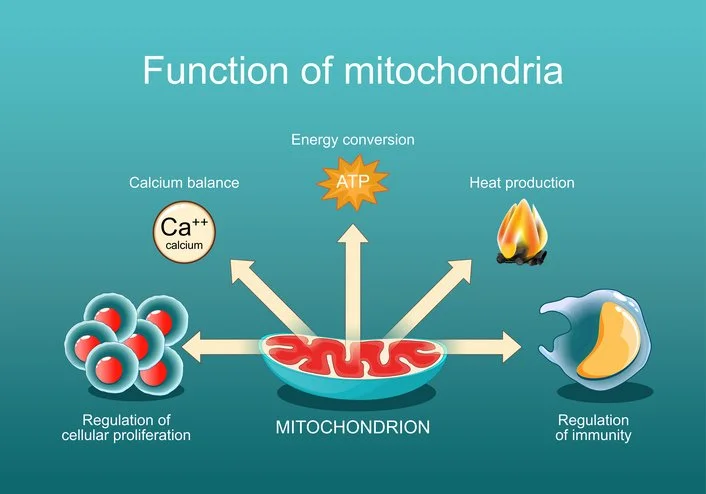
Nutritional gaps. Your mitochondria, the energy factories inside your cells, need specific raw materials to make ATP, including magnesium, B vitamins, CoQ10, iron, and copper. When those are missing, energy production falters. You can’t run on fuel you don’t have. (This is the throughline of my book Minerals: The Forgotten Nutrient, and it matters here too.)
Sitting still. Movement circulates blood and lymph and stimulates tissue repair. Without it, things stagnate.
Aging. Mitochondrial function declines over the years. That isn’t failure, it’s wear from decades of living, and it can be supported.
Pushing through for too long. Ignoring fatigue, overriding your body’s signals, grinding through stress without recovery. Your body adapts, but adaptation has a cost, and eventually the reserves run low.
You’ll notice I left something off this list that often appears in articles like this: the idea that everyday electromagnetic fields from phones and Wi-Fi drain your cells. I left it off on purpose. The World Health Organization and national radiation-protection agencies have reviewed this question for decades and have not established adverse health effects from device-level EMF at normal exposures. Including that claim in an article about electromagnetic therapy also undercuts the whole premise. I’d rather give you the version that holds up.
None of the real causes above mean your body is broken. They mean it has been working hard and the rhythm got disrupted. Rhythm can be restored.

What Happens When Your System Gets Depleted
When your cells lose their charge and your body's electrical communication gets disrupted, you might experience:
Persistent fatigue. Not the kind that sleep fixes. The kind that lives in your bones.
Pain that lingers. Injuries that should have healed months ago. Inflammation that won't resolve.
A nervous system stuck on high alert. Anxiety, hypervigilance, difficulty relaxing—even when you're safe.
Brain fog and poor focus. Your brain uses more energy than any other organ. When cellular energy drops, cognition suffers.
Slow recovery. From workouts, from illness, from stress. Everything takes longer than it should.
This isn't weakness. It's depletion. Your body is doing its best with depleted resources.
What Is PEMF Therapy?
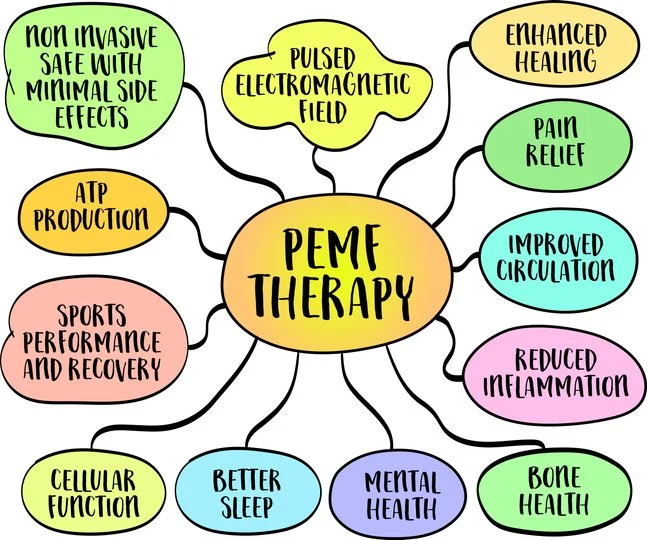
PEMF stands for Pulsed Electromagnetic Field therapy. A device delivers gentle, pulsing magnetic fields that pass into your tissues. The earth itself generates a natural electromagnetic field, and so does every heartbeat and firing neuron, so the basic principle is not exotic.
The honest framing is this: PEMF is being studied as a way to support your body’s own electrical and repair processes. Researchers think it may help cells take in nutrients and clear waste more efficiently, ease inflammation, improve local circulation, and calm an overactive nervous system. How strong the evidence is depends entirely on which of those you’re asking about, which is exactly what the next two sections sort out.
How Researchers Think It Works
When a pulsed magnetic field passes through tissue, several effects have been described in laboratory and clinical studies. I’m wording these as proposals rather than guarantees, because that’s what the science supports.
Anti-inflammatory signaling. This is the best-supported mechanism. PEMF appears to act on adenosine receptors (A2A and A3) on the cell surface, which can dial down inflammatory signaling. This is the mechanism orthopedic researchers point to when they explain why PEMF helps bone and joint tissue.
Membrane and mitochondrial support. Some studies suggest PEMF may help stabilize the cell’s electrical charge and support ATP production. The cellular and animal evidence here is more developed than the large human-trial evidence, so treat this as a promising mechanism rather than a proven outcome.
Better local circulation. Several studies show improved microcirculation after treatment, which would mean better oxygen and nutrient delivery and better waste removal in the treated area.
Nervous-system effects. Certain frequencies may influence brain activity and relaxation. This is the least-established area, supported more by people’s reported experience and small studies than by large trials. It’s a reasonable hope, not a sure thing.
PEMF and Your Nervous System
If you’ve been living with chronic stress or a nervous system that never quite settles, the appeal of PEMF is real, and I want to be straight with you about where the evidence stands.
The theory is sensible: a nervous system needs energy to regulate itself, and if cellular energy is low, the system stays reactive. Supporting that energy could, in principle, widen your capacity to settle. Many people who try full-body PEMF report exactly that. They describe feeling calmer and more grounded after sessions, sleeping better, reacting less sharply to stress, and finding it easier to rest.
What I won’t tell you is that this is proven. Most of the nervous-system and sleep benefit people describe is supported by personal experience and small studies rather than large, rigorous trials. That doesn’t make it worthless. People’s lived experience matters, and PEMF is low-risk for most people. It does mean you should treat nervous-system support as a reasonable thing to try, not a guaranteed result, and judge it by how you respond.
This fits the Feel-Pause-Act approach I come back to in all my work. PEMF doesn’t force relaxation. At most, it may give your nervous system a little more room to find its own way back to balance, and you stay the one paying attention to whether it’s actually helping.
What the Evidence Actually Shows
Here is where most PEMF articles oversell, so I’m going to sort the research into honest tiers.
Strong and regulatory-backed: bone healing. The U.S. FDA approved PEMF for non-union fractures in 1979 and later cleared specific devices for spinal fusion. Decades of clinical use and controlled trials support this. This is the most established use of PEMF, full stop.
Reasonable but mixed-quality: knee osteoarthritis pain. Multiple randomized trials and systematic reviews find that PEMF reduces pain and improves function in knee osteoarthritis, at least in the short term. The honest caveat from those same reviews is that the studies are often small, use very different devices and protocols, and are of low-to-medium quality, so reviewers stop short of declaring firm proof. There’s a consistent signal worth taking seriously, not a closed case.
Emerging and preliminary: everything else. Post-surgical pain and swelling (studied mainly in plastic surgery), fibromyalgia, nerve repair (largely animal research so far), sleep, and mood all have early or limited supporting research. These are promising directions, not established outcomes.
PEMF is not fringe science. It has a real regulatory foothold and decades of investigation. But the strength of the evidence drops off sharply once you move past bone healing, and any honest discussion has to say so.
A Note Before the Devices
pH Labs plans to offer PEMF, and I want to be transparent that this article describes a service we intend to provide. That’s exactly why I’ve held the claims to a stricter standard rather than a looser one. You should weigh a recommendation more carefully when the people making it also offer the service, and I’d rather earn your trust than spend it.
Two more honest distinctions before the device descriptions below:
First, the FDA clearances I mentioned apply to specific low-intensity bone-growth and spinal-fusion devices. They do not mean every PEMF device is FDA-cleared, and they do not cover fatigue, mood, or nervous-system uses.
Second, the higher-intensity wellness devices described below are a different category from those low-intensity bone stimulators, and they are less studied. The intensity figures are the manufacturer’s published specifications.

Two Approaches: Targeted and Full-Body
Soon we will offer two complementary PEMF systems that work together to address both specific concerns and whole-body wellness.
TheraVive PMT: Targeted Therapy
A handheld applicator focuses pulsed magnetic energy on a specific area.
- High-intensity output (the manufacturer specifies 0.1–1 Tesla) for deeper tissue penetration
- Precision targeting for joints, muscles, and specific pain points
- Paired with 650nm red light
- Adjustable settings
- Sessions of roughly 5–60 minutes depending on the area
Most likely to help with localized pain (back, knee, shoulder, neck), joint and arthritis discomfort, sports injuries and muscle recovery, and targeted inflammation. Many people feel warmth, gentle pulsing, or tingling during treatment.
TheraVive MLS Mat & Loop System: Full-Body Restoration
A mat you lie on, fully clothed, for whole-body treatment.
- Full-body coverage
- Manufacturer-specified intensity of 1,000–6,000 Gauss, adjustable
- Comfortable mat design
- Optional loop wands for more focused treatment
- Sessions of roughly 15–30 minutes
Most often chosen for general recovery, stress and sleep support, systemic inflammation, and overall maintenance. Many people describe the mat as deeply relaxing, sometimes meditative.
The two are designed to work together: the mat for broad, foundational support and the wand for a specific stubborn area.
What a Session Feels Like
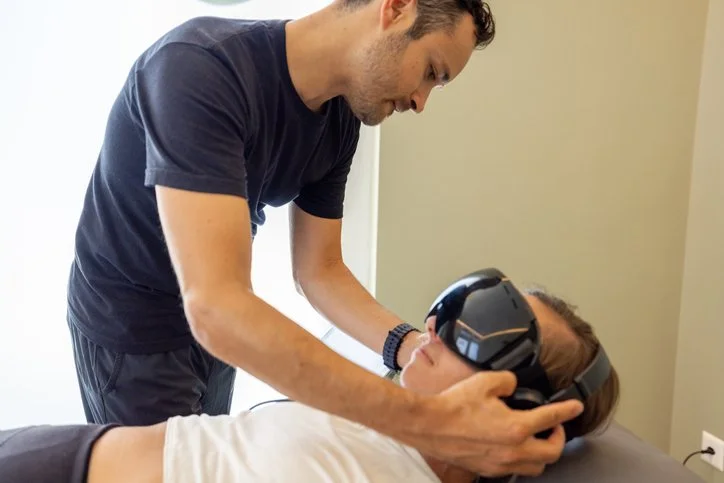
On the mat: you lie down fully clothed and most people feel a subtle pulsing or humming, some warmth, muscles letting go, and a settling sense of calm. Sessions run about 15–30 minutes, and effects tend to build over several sessions rather than arriving all at once.
With the targeted applicator: a practitioner places it on or near the area, and you may feel gentle pulsing, warmth, or tingling, with some people noticing relief during the session itself.
Who Tends to Consider It?
PEMF is worth considering if you’re dealing with chronic pain or inflammation, recovering from injury or surgery, training hard and wanting better recovery, working through stress or burnout, or simply feeling depleted and looking to support your body’s own healing. As with anything, the real test is whether it helps you.
Important cautions. PEMF is generally not recommended for people with a pacemaker, an implanted electrical or electronic device, or during pregnancy. If you have any implanted metal or device, talk with your healthcare provider before trying it.
Supporting Your Other Work
PEMF doesn’t replace your other care, and it isn’t a cure for anything. At best it may create better conditions for the rest of your efforts to land: a calmer nervous system for emotional work, less pain so movement comes easier, more energy for the repair your body already knows how to do.
The Rhythm of Healing
Your body was built to move between states. Activity and rest. Tension and release. Health is less a fixed destination than a rhythm you return to. PEMF, used honestly and watched closely, is one possible way to support that rhythm. Not by forcing anything, and not by promising more than the science can back, but by giving your body a little more room to do what it already does.
You can’t think your way into cellular health or willpower your way into nervous-system calm. Sometimes support has to reach a level deeper than thought, and it’s worth trying things that might help, as long as you stay honest about what they can and can’t do.
References
1. Markovic L, Wagner B, Crevenna R. Effects of pulsed electromagnetic field therapy on outcomes associated with osteoarthritis: a systematic review of systematic reviews. Wiener Klinische Wochenschrift. 2022;134(11–12):425–433.
2. Cianni L, Di Gialleonardo E, Coppola D, et al. Current Evidence Using Pulsed Electromagnetic Fields in Osteoarthritis: A Systematic Review. Journal of Clinical Medicine. 2024;13(7):1959.
3. Iannitti T, Fistetto G, Esposito A, Rottigni V, Palmieri B. Pulsed electromagnetic field therapy for management of osteoarthritis-related pain, stiffness and physical function: clinical experience in the elderly. Clinical Interventions in Aging. 2013;8:1289–1293.
4. Pulsed Electromagnetic Field Stimulation of Bone Healing and Joint Preservation: Cellular Mechanisms of Skeletal Response. JAAOS Global Research & Reviews. 2020;4(5).
5. U.S. Food and Drug Administration. Approval of pulsed electromagnetic field stimulators for non-union fractures (1979) and spinal fusion. FDA premarket approval records (e.g., Orthofix PhysioStim).
6. World Health Organization. Radiation: Electromagnetic fields and public health. International EMF Project — no adverse health effects established below recommended exposure limits.
7. Markov MS. Pulsed electromagnetic field therapy: history, state of the art, and future. The Environmentalist. 2007;27(4):465–475.
8. Funk RHW, Monsees T, Özkucur N. Electromagnetic effects: from cell biology to medicine. Progress in Histochemistry and Cytochemistry. 2009;43(4):177–264.
9. Strauch B, Herman C, Dabb R, Ignarro LJ, Pilla AA. Evidence-based use of pulsed electromagnetic field therapy in clinical plastic surgery. Aesthetic Surgery Journal. 2009;29(2):135–143.
10. Rohde C, Chiang A, Adipoju O, Casper D, Pilla AA. Effects of pulsed electromagnetic fields on interleukin-1β and postoperative pain: a double-blind, placebo-controlled, pilot study in breast reduction patients. Plastic and Reconstructive Surgery. 2010;125(6):1620–1629.
11. Sutbeyaz ST, Sezer N, Koseoglu F, Kibar S. Low-frequency pulsed electromagnetic field therapy in fibromyalgia: a randomized, double-blind, sham-controlled clinical study. The Clinical Journal of Pain. 2009;25(8):722–728.
_______________
Joy Stephenson-Laws, J.D., is a healthcare attorney with over 40 years of experience championing fairness in the healthcare system. She is the founder of Proactive Health Labs (pH Labs), a national non-profit that embraces a holistic approach to well-being: body, mind, heart, and spirit. As a certified holistic wellness coach, she helps individuals and families create practical, lasting health strategies.
This article is for educational purposes only and is not medical advice. If you're considering PEMF therapy, please talk with a qualified healthcare provider, especially if you have an implanted device or other health concerns.