
By: Joy Stephenson-Laws, JD, Founder and President
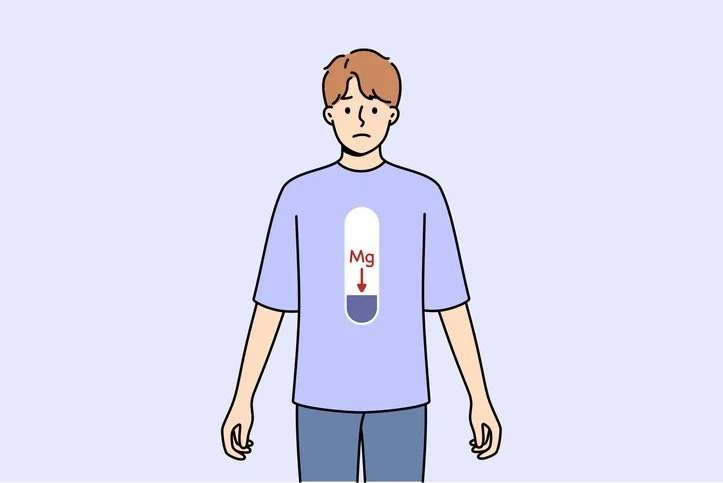
November is National Diabetes Month. If you have type 2 diabetes, you may know your blood sugar readings and your A1C. Your cells use magnesium when they respond to insulin. High blood sugar appears to increase the magnesium lost in urine, and the comprehensive metabolic panel, a common routine blood test, does not include magnesium, so a low level can go unnoticed. Some studies have found blood sugar improvements with magnesium supplements, but the evidence does not support taking them routinely for that purpose. What helps is asking your clinician whether you need a magnesium test, and eating magnesium-rich foods.
Feel
Your A1C is near the goal your doctor set, and your last lab report flagged nothing. You may still feel that something is off: more tired than you expect, or bothered by muscle cramps. Or, after reading about magnesium, you may want to buy a bottle of it today.
Both reactions are information. Neither one tells you your magnesium level or whether a supplement would help you. For that, pause and look at what is known.
Pause

What magnesium does for blood sugar
Magnesium helps more than 300 enzyme systems in the body do their work, including those that control blood sugar. It also takes part in the steps by which cells respond to insulin, the hormone that moves glucose from the blood into cells. When cells respond poorly to insulin, the condition is called insulin resistance, a central feature of type 2 diabetes. The pancreas may make more insulin to compensate, but over time blood sugar can rise. In one laboratory study, fat cells kept short of magnesium took up about half as much sugar in response to insulin as cells with normal magnesium.
Why type 2 diabetes can lower magnesium
Low magnesium is more common in people with type 2 diabetes. High blood sugar sends extra glucose to the kidneys and increases the amount of urine you make, and magnesium appears to be lost with that urine. Researchers are still studying how much low magnesium adds to insulin resistance and how much insulin resistance adds to magnesium loss. Your own level depends on more than diabetes: your diet, kidney function, medicines and blood sugar control all affect it.
Some medicines lower magnesium too: prescription heartburn drugs called proton pump inhibitors (PPIs), such as omeprazole, usually when taken for more than a year; and loop and thiazide diuretics such as furosemide and hydrochlorothiazide.
Why routine blood work can miss it
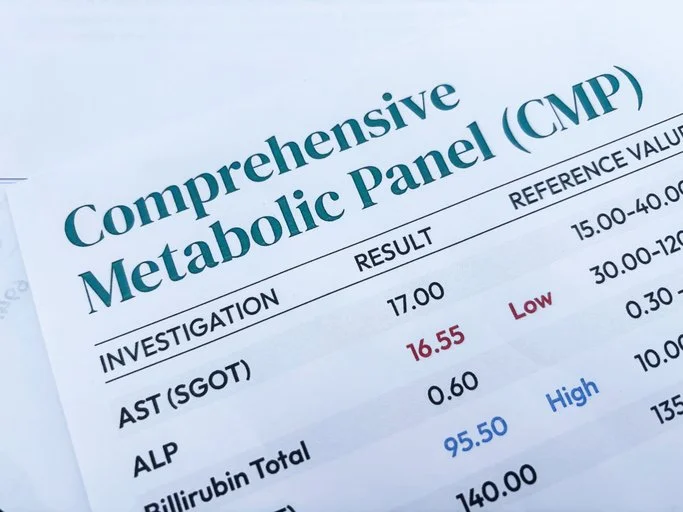
The comprehensive metabolic panel measures 14 substances, including glucose, calcium, sodium and potassium. Magnesium is absent from that list. Unless your clinician orders it separately, your lab report will have no magnesium result.
The magnesium test has limits. Less than 1% of your body’s magnesium is in your blood serum; most is in bone and muscle. Your blood level can be normal while the magnesium stored in your body is low. No single test is considered satisfactory. A magnesium test can identify a low blood level, and your clinician interprets the result alongside your symptoms, medicines and medical history, using the range printed on your lab report.
What the research says about supplements
The American Diabetes Association’s 2026 Standards of Care say magnesium supplements are not recommended for blood sugar benefits.
The trials are small, and their results conflict. A 2003 trial of 63 adults with type 2 diabetes and low magnesium found lower fasting blood sugar and A1C after 16 weeks of magnesium than with a placebo. A 2023 trial of 14 adults with type 2 diabetes who used insulin and had low magnesium found no difference from placebo in insulin sensitivity, A1C, glucose monitor readings or insulin dose after six weeks. The two trials studied different patients.
Correcting a deficiency is a separate question. If you have one, your clinician may recommend treatment whether or not it improves your A1C. For lowering blood sugar, the evidence does not support routine use.
What the pause tells you
The first reaction has a factual basis: routine panels leave magnesium off, and the blood test has limits. A test can show a low blood level; your clinician decides what it means for your symptoms. The second reaction may come from wanting to correct a shortfall in your diet or from hoping for lower blood sugar. A supplement can correct a shortfall. For blood sugar, the evidence is mixed, and supplements carry risks, especially for people with kidney disease.
Act

Ask whether a magnesium test makes sense for you
You take a prescription PPI long term, or a diuretic. The FDA advises clinicians to consider checking magnesium before and periodically during PPI treatment for patients who will take a PPI long term or who also take a diuretic.
You have symptoms linked to low magnesium, such as fatigue, weakness, nausea, numbness, tingling, muscle cramps or an irregular heartbeat. Each has many possible causes. An irregular or racing heartbeat needs prompt medical attention.
Your blood sugar has been hard to control. In people with type 2 diabetes, lower magnesium has been linked with higher fasting blood sugar; these studies cannot show which comes first.
You have kidney disease or plan to take a supplement. Kidneys that work poorly have trouble removing extra magnesium.
Eat for magnesium first
Adults 31 and older need 420 mg a day (men) or 320 mg a day (non-pregnant women). Good sources include:
Food Serving Magnesium
Pumpkin seeds, roasted 1 ounce 156mg
Chia seeds 1 ounce 111mg
Almonds, dry roasted 1 ounce 80mg
Spinach, boiled ½ cup 78mg
Black beans, cooked ½ cup 60mg
Brown rice, cooked ½ cup 42mg
The eating pattern the ADA recommends for people with diabetes already centers on vegetables, legumes, whole grains, nuts and seeds.

If you and your clinician decide on a supplement
Upper limit. For adults, the usual upper limit is 350 mg a day from supplements and magnesium-containing medicines combined, including some laxatives and antacids. Take more only if your clinician recommends it. The limit leaves out magnesium from food, because healthy kidneys remove the extra.
Side effects. High doses often cause diarrhea, nausea and stomach cramps.
Kidneys. Reduced kidney function raises the risk of magnesium building up to toxic levels.
Other medicines. Magnesium can interfere with some osteoporosis drugs and antibiotics. Ask your pharmacist how far apart to take them.
Questions to bring to your next appointment
Has my magnesium ever been tested? If so, what was the result and the date?
Do any of my medicines lower magnesium?
Given my kidney function, would a magnesium supplement be safe for me?
If my magnesium is low, what treatment and follow-up testing do I need?
Managing diabetes means understanding more than your blood sugar number.
Joy Stephenson-Laws, JD, is the founding and managing partner of Stephenson, Acquisto & Colman, a healthcare litigation firm, and the founder and president of Proactive Health Labs, a national nonprofit focused on evidence-based health literacy. A healthcare attorney for more than forty years and a certified holistic wellness coach, she writes about how people can partner with their doctors without surrendering their own judgment.
Her books include Your Labs Are Fine. You're Not., Advice on Trial: The Beliefs You Inherited but Never Examined, From Chains to Wings: A Poetry Revolution for Healing,Secrets That Sparkle (and Secrets That Sting), and Minerals - The Forgotten Nutrient: Your Secret Weapon for Getting and Staying Healthy.
(This article is for general education and is not medical advice. It is meant to help you ask better questions, not to replace evaluation by a qualified clinician).
RESOURCES & FURTHER READING
American Diabetes Association Professional Practice Committee for Diabetes. 5. Facilitating positive health behaviors and well-being to improve health outcomes: Standards of Care in Diabetes—2026. Diabetes Care. 2026;49(Suppl 1):S89-S131. doi:10.2337/dc26-S005
Drenthen LCA, de Baaij JHF, Rodwell L, van Herwaarden AE, Tack CJ, de Galan BE. Oral magnesium supplementation does not affect insulin sensitivity in people with insulin-treated type 2 diabetes and a low serum magnesium: a randomised controlled trial. Diabetologia. 2024;67(1):52-61. Published online November 3, 2023. doi:10.1007/s00125-023-06029-9
Gommers LMM, Hoenderop JGJ, Bindels RJM, de Baaij JHF. Hypomagnesemia in type 2 diabetes: a vicious circle? Diabetes. 2016;65(1):3-13. doi:10.2337/db15-1028
MedlinePlus. Comprehensive metabolic panel (CMP). National Library of Medicine. Updated December 4, 2023. medlineplus.gov
MedlinePlus. Magnesium blood test. National Library of Medicine. Updated October 25, 2023. medlineplus.gov
National Institute of Diabetes and Digestive and Kidney Diseases. National Diabetes Month. niddk.nih.gov
NIH Office of Dietary Supplements. Magnesium: fact sheet for consumers. Updated March 22, 2021. ods.od.nih.gov
NIH Office of Dietary Supplements. Magnesium: fact sheet for health professionals. Updated January 6, 2026. ods.od.nih.gov
Oost LJ, Kurstjens S, Ma C, Hoenderop JGJ, Tack CJ, de Baaij JHF. Magnesium increases insulin-dependent glucose uptake in adipocytes. Front Endocrinol (Lausanne). 2022;13:986616. doi:10.3389/fendo.2022.986616
Rodríguez-Morán M, Guerrero-Romero F. Oral magnesium supplementation improves insulin sensitivity and metabolic control in type 2 diabetic subjects: a randomized double-blind controlled trial. Diabetes Care. 2003;26(4):1147-1152. doi:10.2337/diacare.26.4.1147
US Food and Drug Administration. Prilosec (omeprazole) prescribing information, section 5.7, Hypomagnesemia. Revised January 2012. accessdata.fda.gov