Trauma and Your Health – What You Need to Know

By: Joy Stephenson-Laws, JD, Founder and President
Updated September 2026
FEEL.
You are at your desk answering email when a picture of the playground where you were bullied comes into your mind. Your heart starts to race, and you feel small again.
On a Saturday at the mall, a salesperson at the fragrance counter hands you a sample. The floral, citrus scent is the one your abuser wore when you were a child. Your stomach turns, and you ask her where the nearest restroom is.
A friend texts you: "I can't do Friday. I'm going to lunch with my mom." Your eyes fill with tears. You watched your own mother take her last breath in a hospital bed, and one ordinary text makes you remember that hospital room.
PAUSE.
The federal Substance Abuse and Mental Health Services Administration (SAMHSA) defines trauma this way: "Individual trauma results from an event, series of events, or set of circumstances that is experienced by an individual as physically or emotionally harmful or life threatening and that has lasting adverse effects on the individual's functioning and mental, physical, social, emotional, or spiritual well-being." SAMHSA lists loss alongside violence, abuse, neglect, disaster and war among its causes.

Two people can live through the same event and be affected differently. SAMHSA notes that many people go on with their lives without lasting negative effects, while others have more difficulty. The effects vary as well, from hypervigilance and a constant state of arousal to numbness and avoidance.
The Centers for Disease Control and Prevention (CDC) studies trauma in childhood under the name adverse childhood experiences (ACEs). These are potentially traumatic events between birth and age 17, such as violence, abuse or neglect, or growing up in a household with substance use or mental health problems. A 2019 CDC study of more than 144,000 adults in 25 states compared adults who reported four or more types of ACEs with adults who reported none. After adjusting for age, sex and race or ethnicity, the first group had higher odds of reporting coronary heart disease, stroke, asthma, chronic obstructive pulmonary disease, cancer, kidney disease, diabetes, overweight or obesity, and depression, and higher odds of smoking and heavy drinking. The strongest link was with depression.

That study has limits. Participants reported their childhoods from memory, and each person was surveyed once. The authors write that the design cannot show that the childhood experiences caused the illnesses. It shows that people who reported more of these experiences also reported more of these illnesses.
Among studies of mental health conditions after trauma and heart disease, most have focused on posttraumatic stress disorder (PTSD). A 2023 review in the journal Translational Psychiatry reports that trauma exposure over a lifetime has been linked to coronary heart disease, heart attack and stroke, and that PTSD predicts a range of heart and blood vessel conditions in both men and women. The same review describes PTSD as marked by heightened arousal of the nervous system, including a raised heart rate and blood pressure.
The CDC notes that prolonged stress from ACEs can affect a child's brain development, immune system and stress-response systems. It also states that ACEs can be prevented. That is why I wrote Secrets That Sparkle (and Secrets That Sting), a children's book on body safety.
ACT.
When you are ready, tell your doctor about your history. The authors of the CDC study name screening in primary care, with referral and support, as one way to reduce harm for people who have already lived through childhood adversity.
If reactions like the ones above come often or interfere with work, sleep or relationships, talk with a licensed mental health professional. PTSD is one possibility, and it has specific diagnostic requirements, including the kind of event a person went through. A professional can also check for conditions that often occur with PTSD or on their own, such as depression, anxiety or a substance use problem.
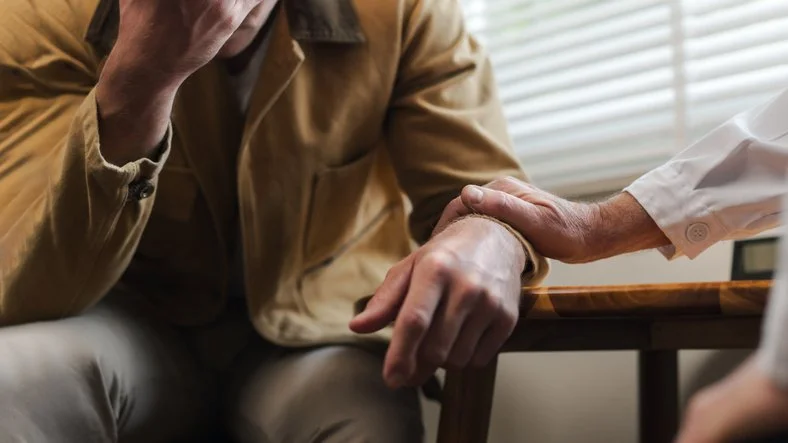
For adults diagnosed with PTSD, the 2023 treatment guideline from the U.S. Departments of Veterans Affairs and Defense, written for the care of veterans and service members, recommends therapy over medication. Its strongest recommendations go to three trauma-focused therapies: Cognitive Processing Therapy, eye movement desensitization and reprocessing (EMDR), and Prolonged Exposure. When therapy is not available or not wanted, it recommends paroxetine, sertraline or venlafaxine, and it recommends against benzodiazepines and cannabis. It suggests Mindfulness-Based Stress Reduction. It found too little evidence to recommend for or against yoga, exercise, relaxation training or somatic experiencing as treatments for PTSD, which means the studies were too few, inconclusive or conflicting to support a recommendation either way.
Pay attention to how you use alcohol. Heavy drinking was one of the outcomes linked to childhood adversity in the CDC study, and the 2023 review notes greater substance use among people with PTSD. If a drink has become how you get through the evening, tell your doctor that too.
Tell one person you trust, if you choose to. The Veterans Affairs and Defense guideline lists support from other people among the needs a PTSD treatment plan should address.
If you are in crisis, call or text 988, or chat at chat.988lifeline.org. The 988 Suicide & Crisis Lifeline is free, confidential and available 24 hours a day, every day of the year.
The playground may still come into your mind at your desk. Feel. Pause. Act. is practice for the moment after it does: notice your racing heart, name the memory that started it if you can, and choose your next step.
Joy Stephenson-Laws, JD, is the founding and managing partner of Stephenson, Acquisto & Colman, a healthcare litigation firm, and the founder and president of Proactive Health Labs, a national nonprofit focused on evidence-based health literacy. A healthcare attorney for more than forty years and a certified holistic wellness coach, she writes about how people can partner with their doctors without surrendering their own judgment.
Her books include Your Labs Are Fine. You're Not., Advice on Trial: The Beliefs You Inherited but Never Examined, From Chains to Wings: A Poetry Revolution for Healing, Secrets That Sparkle (and Secrets That Sting), and Minerals - The Forgotten Nutrient: Your Secret Weapon for Getting and Staying Healthy.
(This article is for general education and is not medical advice. It is meant to help you ask better questions, not to replace evaluation by a qualified clinician).
Resources and References
CDC, About Adverse Childhood Experiences: https://www.cdc.gov/aces/about/index.html
Merrick MT et al., MMWR 2019;68:999-1005: https://www.cdc.gov/mmwr/volumes/68/wr/mm6844e1.htm
SAMHSA's Concept of Trauma and Guidance for a Trauma-Informed Approach (2014), HHS Publication No. (SMA) 14-4884: https://www.health.ny.gov/health_care/medicaid/program/medicaid_health_homes/docs/samhsa_trauma_concept_paper.pdf
Sumner JA et al., Translational Psychiatry 2023;13:25: https://www.nature.com/articles/s41398-023-02330-8
VA/DoD Clinical Practice Guideline for Management of Posttraumatic Stress Disorder and Acute Stress Disorder, Version 4.0 (2023): https://www.healthquality.va.gov/HEALTHQUALITY/guidelines/MH/ptsd/VA-DoD-CPG-PTSD-Full-CPG-Edited-111624-V5-81825.pdf
988 Suicide & Crisis Lifeline: https://988lifeline.org