
The Now Show

What it takes to be present.
By: Joy Stephenson-Laws, JD, Founder and President
Updated October 2026
Much of the time, we are thinking about something other than what we are doing. One study used smartphones to ask people what they were thinking, feeling and doing. It found that they were thinking about what was not happening almost as often as they were thinking about what was. We are already in the present. The practice is noticing when our attention is somewhere else.
What Does "Being Present" Mean?
I am washing a dish. My hands are in warm water, and there is a small ache in my lower back. Then my mind is on Tuesday's conversation, the one where I said the wrong thing. My jaw tightens, and I start working out what I should have said and what the other person must think of me.

I did not decide to think about Tuesday, and I did not notice the moment my attention moved.
Being present does not mean having no thoughts. Thoughts, memories and plans arrive on their own, and attention wanders. The skill is noticing when that happens. One moment I am aware of the dish, the water and the ache in my back; the next I am replaying Tuesday. Recognizing that my attention has moved gives me a chance to decide what to do next.
Tuesday may need my attention. I may owe someone an apology, or the conversation may have shown me a problem I need to address. Or I may have replayed it ten times, and there is nothing more to decide.
Being present means knowing where our attention is and deciding whether we want it to stay there.
Feel. Pause. Act.
Feel means noticing what is happening in us before we decide what to do about it. That includes the feeling and the thought that comes with it: "My jaw is tight. I am embarrassed about what I said on Tuesday." Or "I keep wondering what she thinks of me," or "I am worried about tomorrow." Once we notice a thought, we can ask whether it is true.
Pause means asking one question: Does this thought require something from me? I may need to make a decision, take an action, or do something useful now.
If the answer is yes, Act: send the apology, write down the task, make the appointment or ask the question. If there is nothing to do, I can return to the dish.

The Pause gives us one thing we control, which is our next action. Other people, circumstances, timing and chance decide the rest.
Can Attention Be Practiced?
In one study, researchers randomly assigned 40 adults with no meditation experience either to a meditation group or to a waiting list. The meditation group received three hours of instruction from an experienced teacher in a simple breathing meditation: keep attention on the sensations of breathing, and when the mind wanders, notice it and bring attention back to the breath. They were asked to practice for at least ten minutes a day, at least five days a week, for sixteen weeks. By their own logs, they averaged about eleven minutes a session, five sessions a week. Twenty-eight people were included in the final analysis, twelve of them in the meditation group.
To test attention, the researchers used a color-naming task. Participants saw color words printed in colored ink, sometimes in a color that did not match the word (RED printed in blue ink), and pressed a key for the ink color while ignoring the word. After sixteen weeks, the meditation group did no better on this task than the waiting-list group.
The researchers also recorded the brain's electrical activity while participants did the task. Over the sixteen weeks, two of these measurements moved in opposite directions in the two groups. The researchers interpret the changes as signs that the meditators were focusing attention more efficiently and using fewer mental resources on the mismatched words. The meditators also rated their own mindfulness on a questionnaire, including a scale for noticing thoughts, feelings and sensations, and their ratings rose more than the waiting-list group's.
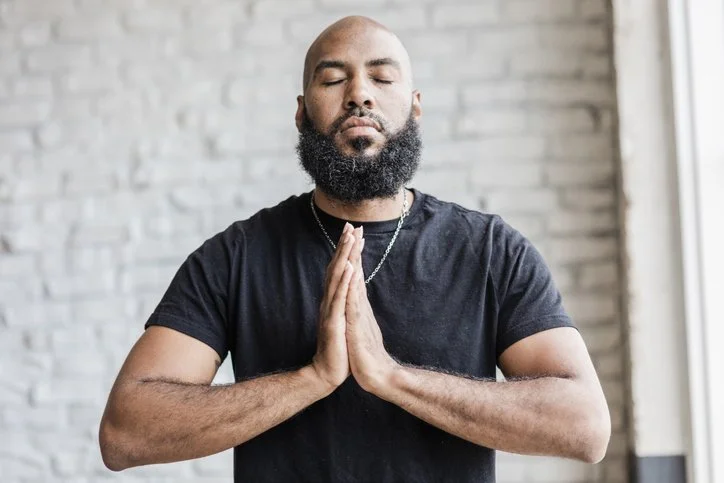
The researchers state the study's limits themselves. A waiting list cannot show whether the breathing practice caused the changes or whether any new daily routine would have done the same. The mindfulness ratings were the participants' own, and the meditation group had twelve people. Attention in everyday life was not measured.
The study shows that adults with no meditation experience can learn a breathing practice in a few hours and keep it up for months. After sixteen weeks of practice, some brain measures of attention changed while performance on the test did not. The study did not test a one-minute practice; the minute below is a place to start.
One Minute.
Choose something to place attention on: the breath, the feet on the floor or the sounds in the room. Set a timer for sixty seconds and stay with it.
At some point a thought will arrive: a memory, a plan for dinner, Tuesday again. Notice it. Naming it can help:
Planning.
Remembering.
Worrying.
Then pause and ask: Does this thought require something from me right now? If the answer is yes, decide what the next action is. If the answer is no, return attention to where it started.
The practice is noticing when attention moves and bringing it back. Each time we do that, we have practiced being present.
What About the Past and the Future?
Being present does not mean ignoring the past or refusing to plan for the future. A memory can teach us something, and a plan can prepare us for something. The question is whether our thinking is doing either one.
I might ask, What did I learn from what happened? and write down the answer. Or I might ask, What is the next thing I need to do? and make it concrete: "I will send that email at nine tomorrow morning." Then I return to what I am doing.
Useful planning ends in a decision, an action or a stopping point. When the thinking keeps going after there is nothing left to decide, I pause again and ask whether there is anything for me to do. Sometimes there is. Sometimes the next useful act is to return to what is in front of me.
The Now Show
Our attention will keep moving away. We will remember yesterday and worry about tomorrow, and sometimes we will notice. When we notice, we can decide whether the thought needs our attention or whether it is time to come back.
Yesterday can teach us, and tomorrow can guide what we do next. Our lives are happening today, and we are already in them.
Joy Stephenson-Laws, JD, is the founding and managing partner of Stephenson, Acquisto & Colman, a healthcare litigation firm, and the founder and president of Proactive Health Labs, a national nonprofit focused on evidence-based health literacy. A healthcare attorney for more than forty years and a certified holistic wellness coach, she writes about how people can partner with their doctors without surrendering their own judgment.
Her books include Your Labs Are Fine. You're Not., Advice on Trial: The Beliefs You Inherited but Never Examined, From Chains to Wings: A Poetry Revolution for Healing,Secrets That Sparkle (and Secrets That Sting), and Minerals - The Forgotten Nutrient: Your Secret Weapon for Getting and Staying Healthy.
(This article is for general education and is not medical advice. It is meant to help you ask better questions, not to replace evaluation by a qualified clinician).
RESOURCES & FURTHER READING
Killingsworth MA, Gilbert DT. A wandering mind is an unhappy mind. Science. 2010;330(6006):932. https://doi.org/10.1126/science.1192439
Moore A, Gruber T, Derose J, Malinowski P. Regular, brief mindfulness meditation practice improves electrophysiological markers of attentional control. Frontiers in Human Neuroscience. 2012;6:18. https://doi.org/10.3389/fnhum.2012.00018