Beyond Calcium: What Postmenopausal Bone Health Actually Requires
By: Joy Stephenson-Laws, JD, Founder
Most women approaching or past menopause have been told the same two things about protecting their bones: take calcium, take vitamin D. The advice is so widespread that it has become reflex. It is also incomplete in two specific and well-documented ways — and the incompleteness may be quietly working against the women following it.
Bone is not a passive storage container for calcium. It is metabolically active tissue, continuously remodeled by cells responding to both biochemical and mechanical signals. The standard advice addresses one corner of one of those signaling systems. What follows is the broader picture.
The remodeling cycle
Bone tissue is in constant turnover. Osteoclasts break down old or damaged bone matrix; osteoblasts build new matrix in its place. In healthy young adults, these processes are roughly balanced. After menopause, estrogen withdrawal disrupts the balance — osteoclast activity increases, osteoblast activity does not keep pace, and the net result is bone loss that accelerates sharply in the years around the menopause transition before slowing into a more gradual ongoing decline (Finkelstein et al., 2008; Greendale et al., 2012).
By the time a woman reaches her 60s, she may already have lost a clinically meaningful percentage of her peak bone mass. The question for the next thirty years is not only whether some bone can be rebuilt — which is difficult and depends on risk, treatment, and training status — but how to minimize further loss and maintain functional capacity.
That question has two answers, and they work together.
The mineral cofactor problem
Calcium is the primary mineral in bone, but bone formation requires more than calcium. The biochemistry is well-established:
Magnesium is required for the enzymatic activation of vitamin D and for the incorporation of calcium into bone matrix. Roughly half of US adults consume less than the recommended intake, and older adults are particularly susceptible to deficiency (Rosanoff et al., 2012). Magnesium deficiency has been associated with both lower bone density and increased fracture risk in observational studies (Castiglioni et al., 2013).
Vitamin K is required for the activation of vitamin K-dependent proteins involved in bone and vascular calcification regulation, including osteocalcin and matrix Gla protein. MK-7 (the longer-acting K2 form) supplementation has shown bone benefits in some postmenopausal trials, including a three-year randomized trial showing improved bone mineral density and reduced bone loss (Knapen et al., 2013), though the broader clinical evidence across vitamin K studies remains mixed. The K1 form abundant in leafy greens converts to K2 inefficiently and variably. The Rotterdam Study found that higher dietary K2 intake was associated with reduced coronary calcification and cardiovascular mortality (Geleijnse et al., 2004).
Vitamin D is necessary for calcium absorption but functions as one player on a larger team rather than the team itself. Optimal serum 25(OH)D ranges remain contested in the literature, but adequate status is foundational for the rest of the system to work.
Boron is a trace element with plausible roles in calcium metabolism, bone formation, and steroid hormone activity, though the evidence base is smaller and it is not classified as an essential nutrient in humans.
This is the argument I made years ago in Minerals: The Forgotten Nutrient — that the body's mineral systems function as coordinated networks, not isolated nutrients, and that addressing a single mineral while ignoring its cofactors produces predictable failures.
The calcium-specific version of that failure has clinical implications worth taking seriously. Multiple meta-analyses have raised concerns about supplemental calcium and cardiovascular risk (Bolland et al., 2010; Bolland et al., 2011), although later reviews have not found consistent evidence of increased CVD risk when calcium intake remains within recommended upper limits (Chung et al., 2016). Dietary calcium has not shown the same signal as supplemental calcium. The mechanism the K2 literature proposes is biologically coherent: when matrix Gla protein remains incompletely activated, the regulatory constraints on calcium deposition in soft tissues are weakened.
The clinical takeaway is not that women should avoid calcium. It is that the cofactor team — magnesium, K2 (specifically MK-7 for bone outcomes), adequate vitamin D, supporting trace minerals — matters in ways the standard "calcium and vitamin D" framing does not capture.
One safety note: women on warfarin should not start K2 supplementation without consulting their physician, as it can interfere with anticoagulation. The newer direct oral anticoagulants do not have this interaction.
The mechanical signal problem
The second incompleteness in standard bone health advice is the relative neglect of mechanical loading.
Bone responds to demand through what Harold Frost termed the mechanostat — the system by which mechanical strain on bone tissue triggers adaptation (Frost, 2003). Strain above a threshold stimulates bone formation; strain below a threshold permits bone resorption. The system is biologically conservative. Tissue that is not asked to bear load is tissue the body permits to weaken.
Walking, the most commonly recommended exercise for older women, is a relatively weak osteogenic stimulus in already-active walkers. Meta-analyses show small effects on femoral neck density and no significant effect on lumbar spine density (Martyn-St James & Carroll, 2008). This does not mean walking lacks value — it supports cardiovascular health, mood, and mobility, and reduces all-cause mortality — but it is generally insufficient as a bone-building intervention on its own.
The most important recent evidence on what does build bone in postmenopausal women with low bone mass comes from the LIFTMOR trial (Watson et al., 2018). The study randomized 101 postmenopausal women with osteopenia or osteoporosis to either a supervised high-intensity resistance and impact training program or a low-intensity home-based program. Over eight months, the high-intensity group showed significant improvements in lumbar spine BMD (+2.9%), femoral neck BMD, functional performance measures, and stature. The low-intensity comparison group did not produce the same gains. No fractures or serious adverse events occurred in the high-intensity group.
The trial's findings should be qualified carefully. LIFTMOR measured BMD and physical function, not fracture incidence — fracture-outcome trials require larger populations and longer follow-up. The training was carefully supervised by exercise physiologists. The participants were screened for medical contraindications. Generalizing the program to unsupervised settings is not warranted.
But the central finding is consistent with the broader exercise physiology literature: bone adapts to loads that are novel, sufficient in magnitude, and progressively challenged over time. Conventional moderate-intensity recommendations may not produce that signal for women already adapted to their current activity level.
This has implications for how bone-health exercise is prescribed. The Exercise and Sports Science Australia position statement (Beck et al., 2017) is more direct than most guidelines in recommending higher-intensity loading, supervised where necessary, as the most effective exercise intervention for bone density in postmenopausal women.
The safety boundary
None of this argues for unsupervised heavy lifting in women with osteoporosis. Spinal flexion exercises specifically can increase vertebral fracture risk in women with existing vertebral bone loss (Sinaki & Mikkelsen, 1984; Sinaki, 2013). For women with diagnosed osteoporosis, prior vertebral fractures, severe kyphosis, balance impairment, or chronic glucocorticoid use, the consensus guidance (Giangregorio et al., 2014) emphasizes spine-sparing technique, individualized assessment, and supervised progression — not generic restrictions or fear-based avoidance.
The distinction matters. The default cultural message to older women is to become more cautious. The evidence-informed message is to become more skillfully challenged.
What this means in practice
Bone health after menopause requires both halves of the system working together:
The biochemical half: adequate protein, calcium primarily from food, vitamin D with confirmed serum status, magnesium with supplementation considered when dietary intake is inadequate or deficiency risk is present, K2 (MK-7 form) for activation of vitamin K-dependent proteins, supporting trace minerals.
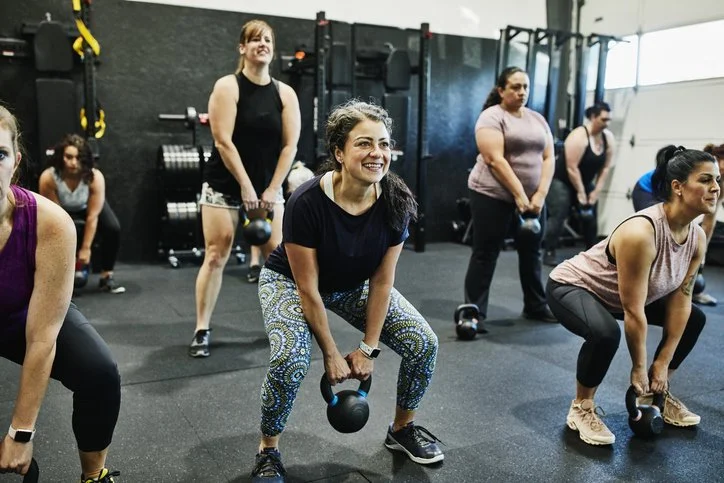
The mechanical half: progressive resistance training of adequate intensity, balance and posture work, and — where appropriate and supervised — controlled impact loading. Walking and gentle movement remain valuable for general health but should not be considered sufficient for bone density preservation in women already adapted to that activity level.
Hormone therapy and bone-targeted pharmacotherapy are separate conversations with their own evidence base. For women at substantial fracture risk, these interventions may be the most effective tools available. The decision belongs with each woman and her clinician.
Calcium and vitamin D remain important, but supplementation alone has not consistently delivered fracture-prevention benefits in community-dwelling postmenopausal women. That is why bone health has to be approached as a whole system: nutrition, loading, fall prevention, risk assessment, and medication when indicated.
Joy Stephenson-Laws, JD, is the founding and managing partner of Stephenson, Acquisto & Colman, a healthcare litigation firm, and the founder and president of Proactive Health Labs, a national nonprofit focused on evidence-based health literacy. A healthcare attorney for more than forty years and a certified holistic wellness coach, she writes about how people can partner with their doctors without surrendering their own judgment.
Her books include Your Labs Are Fine. You're Not., Advice on Trial: The Beliefs You Inherited but Never Examined, From Chains to Wings: A Poetry Revolution for Healing, Secrets That Sparkle (and Secrets That Sting), and Minerals: The Forgotten Nutrient.
RESOURCES AND REFERENCES
Finkelstein JS, Brockwell SE, Mehta V, et al. "Bone Mineral Density Changes During the Menopause Transition in a Multiethnic Cohort of Women." Journal of Clinical Endocrinology & Metabolism. 2008;93(3):861-868.
Greendale GA, Sowers M, Han W, et al. "Bone Mineral Density Loss in Relation to the Final Menstrual Period in a Multiethnic Cohort: Results From the Study of Women's Health Across the Nation (SWAN)." Journal of Bone and Mineral Research. 2012;27(1):111-118.
Rosanoff A, Weaver CM, Rude RK. "Suboptimal magnesium status in the United States: are the health consequences underestimated?" Nutrition Reviews. 2012;70(3):153-164.
Castiglioni S, Cazzaniga A, Albisetti W, Maier JAM. "Magnesium and osteoporosis: current state of knowledge and future research directions." Nutrients. 2013;5(8):3022-3033.
Geleijnse JM, Vermeer C, Grobbee DE, et al. "Dietary intake of menaquinone is associated with a reduced risk of coronary heart disease: the Rotterdam Study." Journal of Nutrition. 2004;134(11):3100-3105.
Knapen MHJ, Drummen NE, Smit E, Vermeer C, Theuwissen E. "Three-year low-dose menaquinone-7 supplementation helps decrease bone loss in healthy postmenopausal women." Osteoporosis International. 2013;24(9):2499-2507.
Bolland MJ, Avenell A, Baron JA, et al. "Effect of calcium supplements on risk of myocardial infarction and cardiovascular events: meta-analysis." BMJ. 2010;341:c3691.
Bolland MJ, Grey A, Avenell A, Gamble GD, Reid IR. "Calcium supplements with or without vitamin D and risk of cardiovascular events: reanalysis of the Women's Health Initiative limited access dataset and meta-analysis." BMJ. 2011;342:d2040.
Chung M, Tang AM, Fu Z, et al. "Calcium Intake and Cardiovascular Disease Risk: An Updated Systematic Review and Meta-Analysis." Annals of Internal Medicine. 2016;165(12):856-866.
Frost HM. "Bone's mechanostat: a 2003 update." The Anatomical Record Part A. 2003;275A(2):1081-1101.
Martyn-St James M, Carroll S. "Meta-analysis of walking for preservation of bone mineral density in postmenopausal women." Bone. 2008;43(3):521-531.
Watson SL, Weeks BK, Weis LJ, Harding AT, Horan SA, Beck BR. "High-Intensity Resistance and Impact Training Improves Bone Mineral Density and Physical Function in Postmenopausal Women With Osteopenia and Osteoporosis: The LIFTMOR Randomized Controlled Trial." Journal of Bone and Mineral Research. 2018;33(2):211-220.
Beck BR, Daly RM, Singh MAF, Taaffe DR. "Exercise and Sports Science Australia (ESSA) position statement on exercise prescription for the prevention and management of osteoporosis." Journal of Science and Medicine in Sport. 2017;20(5):438-445.
Sinaki M, Mikkelsen BA. "Postmenopausal spinal osteoporosis: flexion versus extension exercises." Archives of Physical Medicine and Rehabilitation. 1984;65(10):593-596.
Sinaki M. "Yoga spinal flexion positions and vertebral compression fracture in osteopenia or osteoporosis of spine: case series." Pain Practice. 2013;13(1):68-75.
Giangregorio LM, Papaioannou A, MacIntyre NJ, et al. "Too Fit To Fracture: exercise recommendations for individuals with osteoporosis or osteoporotic vertebral fracture." Osteoporosis International. 2014;25(3):821-835.