PSA Test After 70: Why the Decision Still Matters

By: Joy Stephenson-Laws, JD, Founder and President
Somewhere around a man's seventieth birthday, the PSA conversation changes. The test does not disappear, and Medicare still pays for it once a year, but the default recommendation flips: what had been an individual screening decision becomes a recommendation against routine screening. There is rarely a conversation about that change, no letter, no moment where someone says it out loud, and most men never notice it happened.
There is a sound reason for that, and we will get to it. But it rests on an assumption worth naming first, because some version of it runs through nearly every guideline in medicine: what is true for a population is treated as true for you. A recommendation drawn from the averages of thousands of men becomes the quiet default for the one man in the exam room. Often that serves him well. Sometimes it does not. The space between those two is where being proactive stops being a slogan and starts being something a person actually has to do.
This article lives in that space. It is not a claim that the guideline is wrong. It is a case for feeling the changes in your own body and history, pausing long enough to ask what they mean for you in particular, and acting on your own facts rather than on an average. A widely covered case in 2025, which we will come back to, showed why that question matters.
What the PSA test actually measures
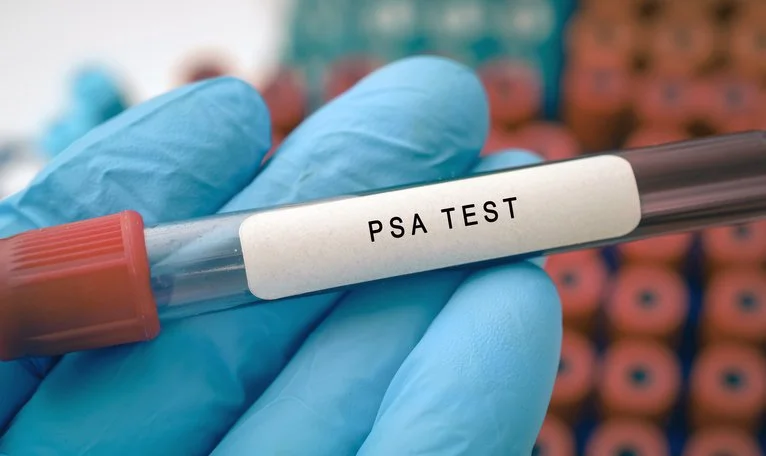
Prostate-specific antigen is a protein the prostate gland produces. A simple blood draw measures how much of it is circulating. When prostate cells become cancerous, they often leak more PSA into the blood, so a rising number can be an early warning.
The catch is that PSA is not specific to cancer. An enlarged but benign prostate raises it. So does infection, inflammation, recent ejaculation, and even a long bike ride. This is the root of the whole debate. The test detects prostate activity, not prostate cancer, and sorting one from the other often means biopsies, anxiety, and treatment that carries its own harms.
Why the guideline draws a line at 70
The U.S. Preventive Services Task Force gives PSA screening for men 70 and older a Grade D recommendation, meaning it advises against it. The reasoning is not emotional, it is statistical.
In the major randomized trials on this question, which largely enrolled younger men, the evidence did not show a clear prostate-cancer mortality benefit from screening men over 70. Even in the younger group where screening does help, the benefit is modest. For men 55 to 69, screening prevents at most one to two prostate cancer deaths per 1,000 men over 13 years, and roughly three cases of cancer spreading, with no measurable drop in deaths from all causes combined.
Meanwhile the harms stay constant. False alarms lead to biopsies. Biopsies find slow tumors that would never have caused trouble. Those discoveries can lead to surgery and radiation that leave a man incontinent or impotent. Most prostate cancers grow slowly enough that many men die with the disease rather than from it. At 78 or 82, a slow tumor often loses the race against heart disease and everything else. Treating it can cause more suffering than the cancer ever would have.
That picture is shifting, though. Today many low-risk prostate cancers are monitored through active surveillance rather than treated right away, which has reduced some of the overtreatment that shaped the original screening debate. It has not erased the underlying tension, but it matters.
For the typical older man, the math is real and the recommendation is sound.
Where the math has a blind spot
Here is the uncomfortable part, and the reason this guideline deserves a closer look rather than blind trust.
An average is built for the typical case. The typical prostate cancer is slow. But the guideline that protects a man from overtreating a harmless tumor is the same guideline that can leave an aggressive tumor unwatched. This is the 2025 case worth returning to. When former President Joe Biden was diagnosed with Stage 4 prostate cancer that had spread to his bone, the detail that drew the most attention was that his last known PSA test had been about a decade earlier, in 2014. His cancer was reported as a Gleason 9, which falls in the highest grade group and is considered highly aggressive. We cannot know when his cancer began, whether screening during that decade would have caught it, or whether earlier detection would have changed the outcome. What we can say is that the same guideline that spares many older men from unnecessary testing can also mean that an aggressive cancer is not looked for until it announces itself through symptoms.
Both things are true at the same time. The guideline is defensible, and Biden's case illustrates its blind spot. That tension is the whole point.
It is also worth being precise about the fear driving this conversation. Prostate cancer that reaches the bone is not "bone cancer." It is prostate cancer in a new location. It can be painful, and once it spreads to bone it is usually no longer curable in the way localized prostate cancer can be, though treatment can often manage it. The fear is legitimate. The question is whether testing every man over 70 is the way to prevent it, and the trial evidence says, on average, no. So the answer is not "screen everyone." The answer is "stop being passive."
How to be proactive without ignoring the science
Being proactive does not mean overriding your doctor or demanding tests the evidence does not support. It means refusing to let a population average make a personal decision for you.
Know your real risk, not the average one. Family history and genetics can change the conversation. A man whose father or brother had prostate cancer, or who carries a high-risk inherited mutation such as BRCA2, may face a higher risk of clinically significant disease, and the screening conversation often starts earlier. Some guidelines suggest these men begin screening as early as 40 to 45. If aggressive prostate cancer runs in your family, the over-70 cutoff should not be the only fact in the room. It should start a more personal conversation about your risk, your life expectancy, your prior PSA history, and what you would actually do with the result.
Get a baseline early and watch the trend. A single PSA number can mislead. A confirmed rise over time, read alongside age, prostate size, infection, medications, and baseline risk, is often more useful than one isolated value. A man who knows his PSA was 0.8 at age 60 and watches it climb has context that a man with no baseline simply does not have. A newly elevated reading is a reason to repeat the test and, if it remains elevated, investigate further. It is not a reason to panic.
Think in life expectancy, not birthdays. The real question is not how old a man is. It is how much healthy life he still has ahead of him. The guideline's logic is not the number 70, it is whether a man has fewer than 10 to 15 years left. A healthy, active 72-year-old with long-lived parents is a different patient than a frail 72-year-old with serious heart disease. The average American man at 70 has more than 14 years still ahead of him. For many men, that is more than enough time for an aggressive cancer to matter.
Make it a decision, not a default. This is the question Biden's story raises. The public record tells us his last known PSA test was in 2014; it does not tell us what conversations happened behind closed doors. But the useful lesson is clear: "we just did not test" is not the same as "we weighed my risk and chose not to." Ask your physician directly: given my family history, my health, and how long I am likely to live, does screening make sense for me? Shared decision-making appears in every major guideline, including the ones that recommend against routine testing.
Listen to the body's signals. Blood in the urine, unexplained bone pain, especially new aching in the back or hips, or a meaningful change in urinary function deserve attention. Most urinary symptoms in older men, like waking at night to urinate or a weaker stream, come from benign prostate enlargement, not cancer. That is exactly why they were not alarming in Biden's case. But persistent or unusual changes should not be waited out. Feeling a change in your body is information. Pausing to ask what it means, instead of waiting it out, is the proactive move.
The quieter lesson
The headlines treated Biden's missing PSA test as a scandal. The more useful takeaway is calmer than that.
A guideline is a population average, and no individual man is a population.
This article is for education, not medical advice. Decisions about screening should be made with your own physician, who knows your history. Sources: U.S. Preventive Services Task Force prostate cancer screening recommendation (2018, currently under update); major randomized trial evidence summarized by the USPSTF, including the ERSPC, PLCO, and CAP trials; CDC prostate cancer screening and symptoms pages; American Cancer Society early detection guidance; AUA/SUO Early Detection of Prostate Cancer guideline; Medicare prostate cancer screening coverage; Social Security Administration actuarial life table; Associated Press reporting on Biden's last known PSA test and diagnosis timeline.