Prostate Cancer Screening: The PSA, MRI, and Biopsy Conversation Men Keep Avoiding

The fear is human. It just shouldn't be the thing making the decision.
There's a particular kind of silence that happens when you ask a man if he's had his prostate checked. He shifts. He changes the subject. He says he's "due for a physical one of these days." What he's really saying is that he'd rather not think about it, and underneath that, he'd rather not feel what thinking about it brings up: fear, embarrassment, the vague dread of a finger and a rubber glove.
I want to sit with that feeling for a minute, because it's the whole problem. The avoidance isn't laziness. It's emotion doing what unexamined emotion always does, making the decision for you, quietly, in the dark. And in this case the stakes are real.
So before we get to PSA tests and MRIs and biopsies, let's do the thing I always come back to. Feel it. Pause. Then act. Not "be brave." Not "stop being squeamish." Just notice the feeling, give it a beat so it doesn't run the show, and then make a decision with your actual brain instead of your flinch.
Let's walk through what you're actually deciding.
Why this matters more for some men than others
Prostate cancer is the most common cancer in American men, other than skin cancer. But it does not fall evenly.
Black men have roughly double the prostate cancer death rate of white men, and an incidence rate about 67% higher. Put in human terms: about one in six Black men will be diagnosed with prostate cancer in his lifetime, and about one in 35 will die from it. African ancestry sits alongside age and family history as one of the few firmly established risk markers. That risk is not a lifestyle choice or something a man caused. It reflects a mix of factors: inherited biology and tumor behavior, but also earlier onset, later-stage diagnosis, and unequal access to high-quality care. Naming all of it matters, because the parts we can change are the parts that get people in the door sooner.
Here's the part that should change how you think about timing: after years of decline, prostate cancer incidence has been climbing again. The American Cancer Society reports that overall incidence rose about 3% a year from 2014 to 2021, and the steepest rise was in advanced-stage disease, roughly 4.6% to 4.8% a year. Cancer caught early is often very survivable. Cancer caught late is a different conversation. The trend lines are moving in the wrong direction, and the leading explanation is that too many men are being caught too late.
If you have African ancestry, a father or brother who had prostate cancer, or a known BRCA mutation in the family, the math changes for you specifically, and so should the timing. The major guidelines differ on the fine print but point the same way: average-risk men usually start the screening conversation around 50, while higher-risk men should often start in their forties. The American Cancer Society puts the conversation at 45 for African American men and men with a first-degree relative diagnosed young, and at 40 for men with more than one close relative diagnosed early. The AUA similarly recommends offering screening around 40 to 45 for men at increased risk, including Black men, those with a strong family history, and those with certain inherited mutations. The through-line: extra risk means the conversation belongs in your forties, not your fifties.
Feel-Pause-Act, applied here: If reading those numbers tightened something in your chest, good. That's information, not weakness. Pause on it. Then act, not by panicking, but by deciding to have one honest conversation with a knowledgeable doctor. That's the entire ask right now.
Why "just feeling around" isn't the whole story anymore
For decades, the front line of prostate screening was the digital rectal exam, the doctor feeling the gland through the rectal wall for lumps or hardness. It's the part men dread, and it's become less central than it used to be.
Here's the honest version, because a half-truth here would be easy to tear apart. The rectal exam isn't useless. A skilled hand can sometimes feel an abnormality worth investigating. But it has a fundamental limit: a finger can only reach part of the gland, and it can only feel what's large enough and firm enough to feel. Plenty of significant cancers are simply out of reach or too subtle to detect that way. The exam can find some problems. It cannot rule them out.
That's the key reframe. The finger tells you what it can touch. The tools we'll talk about next see what the finger can't. So the question to bring to your doctor isn't "do I have to do the exam?" It's "what are we using besides the exam to get a real picture?"
The modern detection sequence, in plain language
Think of prostate screening as a staircase, not a single leap. You don't go from worried to biopsy in one step. Each stage either reassures you or tells you whether the next step is worth taking.
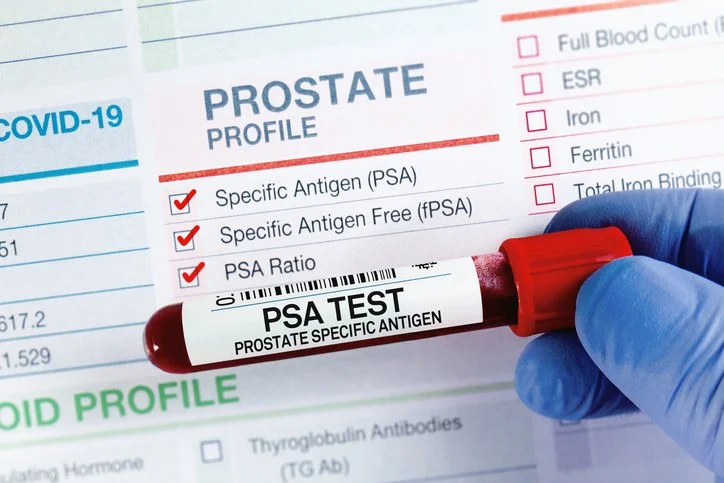
Step one: the PSA blood test
PSA stands for prostate-specific antigen, a protein the prostate makes. A small amount leaks into the blood normally. The idea is simple: cancer tends to disturb the gland's architecture and let more PSA escape, so a higher level can signal a problem.
The honest caveat, and this is where credible people argue, is that PSA is not a cancer detector. It's a "something might be going on here" detector. An enlarged prostate, inflammation, a recent bike ride, even recent sex can nudge it up. This is the real controversy around PSA: it has historically led to a lot of biopsies and treatment for cancers that never would have hurt the man. That's called overdiagnosis, and pretending it isn't real would make everything else I'm telling you less trustworthy.
So PSA is the opening question, not the answer. The job of every step after it is to sort the meaningful elevations from the meaningless ones, before anyone reaches for a needle.
One practical point worth knowing: a single newly elevated PSA usually gets repeated before anyone escalates to imaging or biopsy. PSA fluctuates, so confirming the result is good care, not stalling.
Step two: free PSA and PSA density, the refinements
PSA travels in your blood two ways: bound to other proteins, or floating "free." It turns out that when cancer is present, a smaller fraction tends to be free. So if your total PSA is mildly elevated, a free PSA measurement helps sort the odds: a higher free fraction leans toward benign causes, a lower one raises the concern. It's one more way to avoid an unnecessary biopsy.
PSA density is another refinement: it divides your PSA by the size of your prostate (measured on imaging). A big gland naturally makes more PSA, so a high reading from a large prostate is less alarming than the same reading from a small one. This number becomes useful once imaging is in the picture.
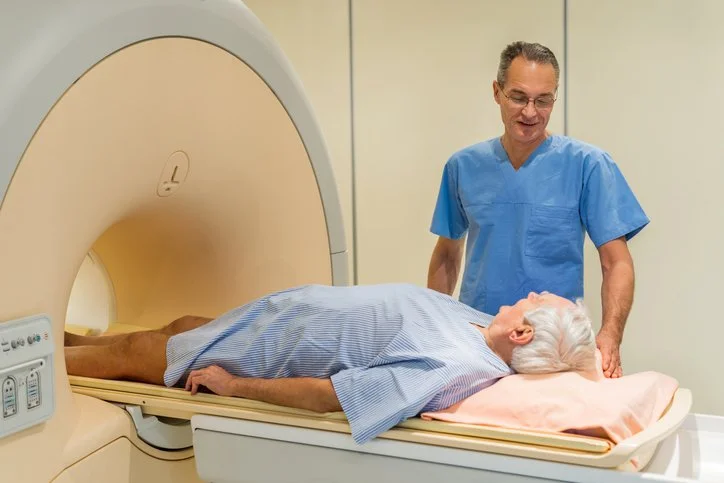
Step three: the prostate MRI, seeing instead of guessing
This is the step most men have never heard of, and it's the one that's changed the game. A multiparametric MRI takes detailed images of the prostate and flags suspicious areas, scored on a 1-to-5 scale called PI-RADS (think of it as a "how suspicious does this look" rating, where 1 is reassuring and 5 is concerning).
Two things make MRI valuable, and it's worth being precise about both:
First, MRI before biopsy can spare some men the biopsy entirely. A reassuring MRI in a man at lower risk has a high "negative predictive value," meaning a clean scan makes significant cancer less likely. European guidelines recommend performing MRI before a first biopsy in men with suspected localized disease, both to improve the odds of finding cancer that matters and to help lower-risk men avoid an unnecessary procedure. One honest limit: a clean MRI lowers the odds but does not zero them out. If a man's overall risk stays high, a biopsy may still be the right move even when the scan looks clear.
Second, and here's the precision we should be aware of, MRI is a targeting and triage tool, not a screening test for the general population. Guidelines do not recommend it as a first-line screening test for everyone. The order matters: PSA raises the question, MRI helps answer whether and where to look. MRI is not the front door. It's the map you pull out once there's a reason to look closely.
So the sequence is: PSA opens the question, free PSA and density refine it, MRI shows you whether there's something worth sampling and exactly where it is.
Feel-Pause-Act, applied here: Most men's fear jumps straight to the worst image: the needle, the diagnosis, the rest of it. Notice that the staircase is built specifically so you don't leap there. Pause at each step. For many men, the path ends at a repeat PSA, some risk refinement, and a reassuring MRI. Acting means taking the steps in order, not bracing for the bottom of a staircase you may never reach.
When a biopsy is actually indicated, and what it tells you
A biopsy is warranted when the picture says the risk is real enough to justify sampling tissue: a suspicious MRI lesion (typically PI-RADS 4 or 5, sometimes 3 depending on PSA density), a worrying PSA pattern, or other findings that add up. A rising PSA can add to that picture, but it shouldn't be the only reason to biopsy. The trend is read alongside your age, prostate size, PSA density, family history, MRI findings, and overall health. A biopsy is the only way to confirm cancer, because it's the only step that looks at actual cells.
Here's what the biopsy is really telling you, and why a single scary number on a PSA test is not a diagnosis. The pathologist grades the cells using the Gleason score, now often expressed as a Grade Group from 1 to 5. This isn't just "cancer: yes or no." It's "how aggressive does this cancer look, and how likely is it to actually threaten you?"
Grade Group 1 cancers are often slow, indolent, and may be safely watched rather than treated. This is "active surveillance," and choosing it can spare a man the side effects of treatment he never needed.
Higher Grade Groups signal cancer that's more likely to grow and spread, where treatment is more often recommended.
This is the distinction that makes the whole proactive approach worth it. The goal of modern screening isn't to find every microscopic cancer and rush everyone into surgery. It's to find the cancers that matter, in time to act, while leaving the harmless ones alone. The biopsy is what tells you which kind you're dealing with.
The two ways a biopsy is done — and why you should ask which
Most men don't know there's a choice here. There is, and it's worth raising with your doctor.
Transrectal biopsy is the traditional method: the needle passes through the wall of the rectum to reach the prostate. It's quick and widely available. Its drawback is that the needle crosses the bowel, carrying gut bacteria with it, which creates a real if small risk of serious infection, the reason antibiotics are routine with this approach.
Transperineal biopsy takes the needle through the cleaned skin of the perineum, the area between the scrotum and the anus, bypassing the bowel entirely. Because the needle never crosses the rectal wall, the infection risk is dramatically lower.
This isn't just theory. A major 2024 randomized trial called PREVENT compared the two head to head. No infections occurred in the transperineal group, versus 1.6% in the transrectal group, while cancer detection was essentially the same between them. The honest tradeoff: men in the transperineal group reported slightly more discomfort during the procedure, but the difference was small and gone within about a week. On the strength of findings like these, transperineal is increasingly favored where it's available, and it can be done in the office under local anesthesia. Both routes are still in use, and access varies by practice.
What this means for you: if a biopsy is on the table, it's entirely reasonable to ask, "Do you offer the transperineal approach, and is it right for me?" You may have a preference your doctor will happily accommodate. You won't know unless you ask.
The conversation to walk in with

This is the point of everything above. Knowledge that stays in your head changes nothing. The act in Feel-Pause-Act is the appointment, and the questions you bring to it. Here's what to ask:
Given my age, family history, and ancestry, when should I start PSA screening, and how often? (If you're Black or have a family history, push on whether you should have started already.)
If my PSA is elevated, what will you do before recommending a biopsy? (You're listening for: repeat the test, check free PSA, consider an MRI, not "let's biopsy right away.")
Should we do an MRI before any biopsy? (This asks whether imaging can help decide if a biopsy is needed at all and, if so, where to target it.)
If I need a biopsy, do you offer the transperineal approach?
If you find cancer, will you tell me the Grade Group, and is active surveillance an option for me? (This protects you from being rushed into treating something that didn't need it.)
A man who walks in with those five questions is no longer a passenger. He's driving. And a partner who hands him this list, or makes the appointment with him, has done something more loving than any amount of nagging ever accomplished.

The feeling was never the enemy
Come back to where we started. The dread, the avoidance, the changing of the subject: none of that is a character flaw. It's a feeling doing its job a little too well, steering you away from discomfort at the cost of your health.
You don't have to override the feeling or pretend it isn't there. You just have to not let it make the decision alone. Feel it. Pause long enough that it stops being the only voice in the room. Then act: one blood test, one honest conversation, one set of questions.
Being human means being afraid of things like this. That's allowed. What you do next is where the living actually happens.
References
1. Saka AH, Giaquinto AN, McCullough LE, et al. Cancer statistics for African American and Black people, 2025. CA: A Cancer Journal for Clinicians. 2025. (Source for the doubled mortality, 67% higher incidence, one-in-six lifetime diagnosis, one-in-35 death figures, and African ancestry as an established risk factor.) https://acsjournals.onlinelibrary.wiley.com/doi/full/10.3322/caac.21874
2. Kratzer TB, Bandi P, Freedman ND, et al. Prostate cancer statistics, 2025. CA: A Cancer Journal for Clinicians. 2025. (Source for the reversal from a 6.4% annual decline to a 3.0% annual rise in overall incidence during 2014-2021, with the steepest increase, about 4.6% to 4.8% per year, in advanced-stage disease.) https://acsjournals.onlinelibrary.wiley.com/doi/full/10.3322/caac.70028
3. Hu JC, Assel M, Allaf ME, et al. Transperineal versus transrectal magnetic resonance imaging-targeted and systematic prostate biopsy to prevent infectious complications: the PREVENT randomized trial. European Urology. 2024;86(1):61-68. doi:10.1016/j.eururo.2023.12.015 (Companion publication of the PREVENT trial; comparable cancer detection between approaches.) https://www.europeanurology.com/article/S0302-2838(23)03342-0/fulltext
4. Hu JC, et al. Transperineal vs transrectal prostate biopsy: the PREVENT randomized clinical trial. JAMA Oncology. 2024;10(11):1590-1593. doi:10.1001/jamaoncol.2024.4000 (Source for zero infections transperineal vs 1.6% transrectal, and the small, short-lived difference in periprocedural pain.) https://pmc.ncbi.nlm.nih.gov/articles/PMC11413751/
5. EAU-EANM-ESTRO-ESUR-ISUP-SIOG Guidelines on Prostate Cancer, 2026. European Association of Urology. (Primary source for the screening-age thresholds: 50 for average risk, 45 for men of African descent or with a family history, 40 for BRCA2 carriers; for the strong recommendation against using MRI as an initial screening tool; and for performing MRI before biopsy in suspected organ-confined disease.) Diagnostic Evaluation chapter: https://uroweb.org/guidelines/prostate-cancer/chapter/diagnostic-evaluation
6. AUA/SAR. Standard Operating Procedure for Multiparametric MRI in the Diagnosis, Staging and Management of Prostate Cancer; PI-RADS v2.1. (Supporting source for PI-RADS scoring and the use of MRI to target biopsies.) https://www.auanet.org/guidelines-and-quality/guidelines/other-clinical-guidance/mri-of-the-prostate-sop
7. American Cancer Society. Recommendations for Prostate Cancer Early Detection. (Source for the ACS screening-discussion ages: 50 average risk, 45 for African American men and men with a first-degree relative diagnosed before 65, 40 for men with more than one such relative.) https://www.cancer.org/cancer/types/prostate-cancer/detection-diagnosis-staging/acs-recommendations.html
8. Early Detection of Prostate Cancer: AUA/SUO Guideline, 2026. American Urological Association. (Source for the strong recommendation to offer screening at age 40 to 45 for people at increased risk, including Black race, germline mutations, or strong family history; for offering screening every 2 to 4 years at ages 50 to 69; for repeating a newly elevated PSA before escalating; and for not using PSA velocity as the sole basis for biopsy.) https://www.auanet.org/guidelines-and-quality/guidelines/early-detection-of-prostate-cancer-guideline
(Joy Stephenson-Laws, JD, is the founder of Proactive Health Labs, a national nonprofit that provides free, evidence-based health education, and the author of Your Labs Are Fine. You're Not. Her work helps people become active, informed partners in their own care).
This article is for education and is not a substitute for personalized medical advice. Your screening plan should be made with a physician who knows your history.