
Peptides That Help You Use Magnesium and Iron

By: Joy Stephenson-Laws, JD, Founder and President
There have been times my bloodwork came back normal and I still felt drained. One reason a normal result can come with symptoms is that a blood test measures what is in your blood, and your body also has to move minerals into the cells that use them. In chapter 6 of my book, Your Labs Are Fine. You’re Not., I wrote that peptides help direct how minerals are used. Two of those peptides are insulin and hepcidin.
What a peptide is
A peptide is a short chain of amino acids, the same building blocks that make up protein. Many hormones are peptides. Your body makes them, releases them into your blood, and uses them to send instructions from one part of the body to another.
Insulin and magnesium
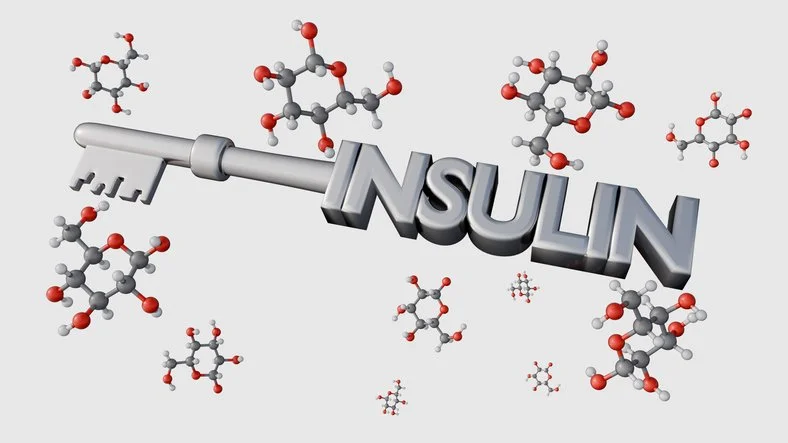
Most people know insulin as the hormone that lowers blood sugar after a meal. Insulin is a peptide, and it also affects magnesium.
Your blood serum holds only a small share of your body’s magnesium, about 0.3 percent. Most of it is in your bones and muscles. Magnesium cannot get into a cell on its own. It needs carrier proteins built into the cell’s outer layer. Insulin helps cells take in and hold on to magnesium. Researchers have shown this in human red blood cells and in isolated rat hearts:
In a study of 10 healthy volunteers, raising insulin lowered the magnesium in their blood plasma and raised the magnesium in their red blood cells. Adding insulin to red blood cells in the lab did the same.
In isolated rat hearts, higher doses of insulin raised the free magnesium inside the heart muscle cells by 15 to 21 percent. Insulin also kept that magnesium from falling when the heart was given a drug that acts like adrenaline.
Insulin also depends on magnesium. Mouse fat cells grown in the lab in a medium with no magnesium took in about half as much sugar in response to insulin. In about 380 people with type 2 diabetes, lower blood magnesium went with more signs of insulin resistance.
Most of this research was done in cells and animals, and scientists are still working out the details. The research shows that a peptide your body makes helps manage where your magnesium goes.
Hepcidin and iron
Hepcidin is a peptide made by your liver, 25 amino acids long. It controls how much iron enters your blood. It does this by blocking ferroportin, the protein that moves iron out of your gut lining, where iron from food is absorbed, and out of your storage cells in the liver and spleen.
When you have plenty of iron, hepcidin rises and you absorb less. This keeps iron from building up to harmful levels.
When you are low on iron or have lost blood, hepcidin falls, so you absorb more and release more from storage.
When you have inflammation or an infection, hepcidin rises and less iron is released from storage. This keeps iron away from some bacteria that need it to grow. If the inflammation lasts, less iron is available for making red blood cells, even though the stores are still there.
Hepcidin causes problems when it is too high or too low. Too much can leave you iron-deficient or anemic. Too little lets iron build up in the liver, heart and other organs. This is what happens in hereditary hemochromatosis.
Hepcidin also explains something practical about iron supplements. In a study of young women with low iron stores and no anemia, a dose of 60 milligrams or more of elemental iron raised hepcidin, and it was still raised 24 hours later. The next day’s dose was absorbed 35 to 45 percent less well. In another study, women aged 18 to 40 with low iron took the same 14 doses of iron, either daily for 14 days or every other day for 28 days. The every-other-day group absorbed about a third more iron in total. That study measured absorption only. It did not test whether anemia improved faster. If your doctor has recommended iron, ask whether every other day would work for you.
The peptides in the news
Some peptide treatments are well tested. People with diabetes have used injected insulin for decades. In a trial of 1,961 adults with overweight or obesity, those given semaglutide, a peptide drug injected once a week, lost an average of 14.9 percent of their body weight over 68 weeks. Those given a placebo lost 2.4 percent. Both groups also received lifestyle counseling.
BPC-157 is sold by wellness clinics and online shops as a healing peptide. What they sell is made in a lab. The University of Zagreb group that developed it describes it as a 15-amino-acid peptide “native to and stable in human gastric juice,” which is the juice in your stomach. The healing results in that group’s reviews come mostly from studies in rats. ClinicalTrials.gov, the US trial registry, lists two trials testing BPC-157 for healing in people. One began recruiting in 2026, and the other has not started. In a document prepared for a July 2026 advisory meeting, FDA staff wrote that BPC-157 is “not well-characterized” and that there is “insufficient clinical safety information” about it. As of October 14, 2026, BPC-157 is not on the FDA’s list of bulk substances that pharmacies may use to compound medicines.
Before trying any peptide treatment, ask what human studies exist for that product at that dose. My book does not recommend any peptide product.
What you can do
Feel. You feel tired or run down, and your labs came back normal. Notice that before deciding what it means.
Pause. Before you buy a supplement, write down:
every medicine and supplement you take, and how long you have taken each
any inflammatory condition or recent infection
whether you take iron, and how often
which tests were done, and which were not
Act. Take the list to your doctor and ask:
Could inflammation be affecting my iron?
If I take iron, should I take it every other day?
Could my magnesium be low even though my blood test is normal?
Should my blood sugar or A1C be checked?
Joy Stephenson-Laws, JD, is the founding and managing partner of Stephenson, Acquisto & Colman, a healthcare litigation firm, and the founder and president of Proactive Health Labs, a national nonprofit focused on evidence-based health literacy. A healthcare attorney for more than forty years and a certified holistic wellness coach, she writes about how people can partner with their doctors without surrendering their own judgment.
Her books include Your Labs Are Fine. You're Not., Advice on Trial: The Beliefs You Inherited but Never Examined, From Chains to Wings: A Poetry Revolution for Healing,Secrets That Sparkle (and Secrets That Sting), and Minerals - The Forgotten Nutrient: Your Secret Weapon for Getting and Staying Healthy.
(This article is for general education and is not medical advice. It is meant to help you ask better questions, not to replace evaluation by a qualified clinician).
RESOURCES & FURTHER READING
Jahnen-Dechent W, Ketteler M. Magnesium basics. Clinical Kidney Journal. 2012;5(Suppl 1):i3-i14. https://doi.org/10.1093/ndtplus/sfr163
Paolisso G, Sgambato S, Passariello N, et al. Insulin induces opposite changes in plasma and erythrocyte magnesium concentrations in normal man. Diabetologia. 1986;29(9):644-647. https://doi.org/10.1007/BF00869264
Amano T, Matsubara T, Watanabe J, Nakayama S, Hotta N. Insulin modulation of intracellular free magnesium in heart: involvement of protein kinase C. British Journal of Pharmacology. 2000;130(4):731-738. https://doi.org/10.1038/sj.bjp.0703361
Oost LJ, Kurstjens S, Ma C, et al. Magnesium increases insulin-dependent glucose uptake in adipocytes. Frontiers in Endocrinology. 2022;13:986616. https://doi.org/10.3389/fendo.2022.986616
Nemeth E, Ganz T. Hepcidin-ferroportin interaction controls systemic iron homeostasis. International Journal of Molecular Sciences. 2021;22(12):6493. https://doi.org/10.3390/ijms22126493
Moretti D, Goede JS, Zeder C, et al. Oral iron supplements increase hepcidin and decrease iron absorption from daily or twice-daily doses in iron-depleted young women. Blood. 2015;126(17):1981-1989. https://doi.org/10.1182/blood-2015-05-642223
Stoffel NU, Cercamondi CI, Brittenham G, et al. Iron absorption from oral iron supplements given on consecutive versus alternate days and as single morning doses versus twice-daily split dosing in iron-depleted women: two open-label, randomised controlled trials. Lancet Haematology. 2017;4(11):e524-e533. https://doi.org/10.1016/S2352-3026(17)30182-5
Wilding JPH, Batterham RL, Calanna S, et al. Once-weekly semaglutide in adults with overweight or obesity. New England Journal of Medicine. 2021;384(11):989-1002. https://doi.org/10.1056/NEJMoa2032183
Sikiric P, Drmic D, Sever M, et al. Fistulas healing. Stable gastric pentadecapeptide BPC 157 therapy. Current Pharmaceutical Design. 2020;26(25):2991-3000. https://doi.org/10.2174/1381612826666200424180139
Staresinic M, Japjec M, Vranes H, et al. Stable gastric pentadecapeptide BPC 157 and striated, smooth, and heart muscle. Biomedicines. 2022;10(12):3221. https://doi.org/10.3390/biomedicines10123221
ClinicalTrials.gov. NCT07437547 (BPC 157 for hamstring strain) and NCT07803250 (BPC-157 after rotator cuff repair). Accessed October 16, 2026. https://clinicaltrials.gov
US Food and Drug Administration. Pharmacy Compounding Advisory Committee briefing document, July 23-24, 2026: Evaluation of BPC-157-related bulk drug substances. https://www.fda.gov/media/193343/download
21 CFR 216.23, Bulk drug substances that can be used to compound drug products. eCFR, current as of October 14, 2026. https://www.ecfr.gov/current/title-21/chapter-I/subchapter-C/part-216/subpart-B/section-216.23