Q&A: pH and Your Body: What's Real, and What Actually Helps
By: Joy Stephenson-Laws, Founder, Proactive Health Labs
At pH Labs, healthy pH balance has always been at the center of how we think about wellness. Over the years we've gotten a lot of thoughtful questions about what that really means. So we wanted to set the record straight, in plain language: how pH works inside you, what you can actually influence, and what the science does and doesn't support.
"My shampoo and soap say they're pH balanced, so I'm good, right?"
The pH of your skincare is a minor thing next to what happens inside you. The good news is that your body manages its own internal pH around the clock, far more precisely than any product ever could. Let's talk about how.
"OK, so what does pH actually mean?"
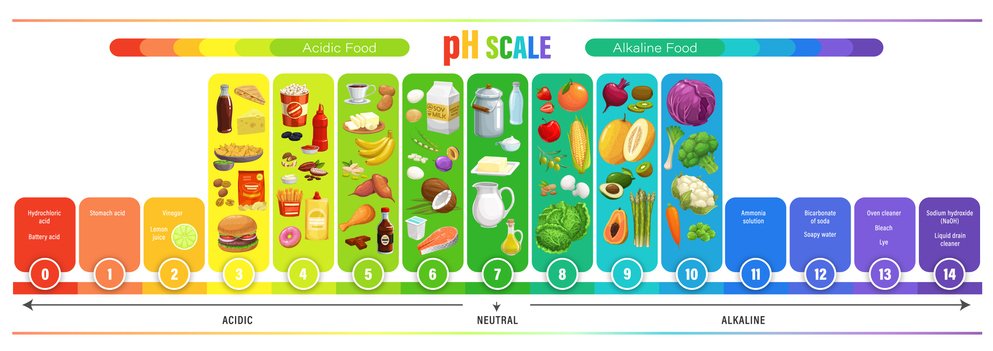
A little chemistry. pH measures how many hydrogen ions are floating around in a solution. Hydrogen is the "H" in H2O, and as an ion it carries a positive charge.
An acid has a low pH and lots of hydrogen ions. Think orange juice, vinegar, and stomach acid. A base, also called alkaline, has a high pH and few hydrogen ions. Think baking soda, blood, and bleach. Pure water sits in the middle at a neutral pH of 7.
"Why should I care about hydrogen ions?"
Because your body cares, intensely. Your blood likes to stay at a pH of about 7.4, just slightly alkaline, and it does not tolerate much drift. Your body is a bit of a perfectionist here. If things start to tilt, it corrects course immediately, mostly through two organs working quietly behind the scenes. Your lungs breathe off acid as carbon dioxide, and your kidneys fine-tune the balance and flush the rest. This system runs every second of your life without you ever noticing.
"What happens if my pH gets a little off?"
Here's the part that surprises people. In a healthy person, your blood pH does not bounce around based on what you eat. Your lungs and kidneys hold it steady no matter what's on your plate. Real shifts in blood pH only happen in serious medical situations, things like kidney failure, lung disease, or a diabetic emergency, where the regulating organs can't keep up. Those are medical events, not the result of having pasta for dinner.
When you truly push your system, say during a hard marathon, your muscles produce more acid for a while. Even then, your lungs and kidneys buffer it and bring you back to balance quickly. The system is remarkably good at its job.
"So I shouldn't drink orange juice?"
Drink the orange juice. It's acidic in the glass, but it doesn't make your blood acidic. Your body neutralizes and processes it without breaking a sweat. The acidity of a food in your mouth tells you almost nothing about what it does once it's inside you.
"Then what can I actually do to support healthy pH?"
This is the honest answer, and it's a freeing one: your body balances your pH for you, automatically. You don't need to manage it with food, and realistically you can't move your blood pH through diet anyway. What you can do is keep the organs that do the work, your kidneys and lungs, healthy, and stay well hydrated. Beyond that, the smartest move is to eat well for all the other reasons a good diet matters, which we'll get to.
"What about alkaline water? Isn't regular water neutral?"
Pure water is neutral. Most tap water in the United States is close to neutral or even slightly alkaline already, since treatment is usually adjusted to protect pipes from corrosion. Alkaline water won't change your body's pH, because your stomach acid resets anything you drink within minutes and your kidneys handle the rest. If you enjoy the taste, there's no harm in it. Just know that the broader health claims often attached to it aren't backed by strong evidence.
"What are 'acidic' foods, then?"
There's a real concept worth understanding here. Foods like processed meat, sugar, and refined carbohydrates do create an acid load that your kidneys process and excrete in your urine. You can actually measure this as urine pH. What it does not do is acidify your blood or your organs. So while going easy on processed meat and sugar is a genuinely good idea, the reason is your overall health, not your blood chemistry.
"And alkaline foods?"
Plant foods like leafy greens, carrots, kiwi, and celery are alkaline-forming, meaning they leave your kidneys with less acid to handle. More importantly, they're loaded with fiber, vitamins, minerals, and protective plant compounds. That's where their real value lives.
"Do alkaline foods actually help my body neutralize acid?"
Great question, and the honest answer is "partly, and here's exactly how far it goes." Your body does buffer acid using raw materials, and plant foods genuinely supply some of them. When you digest the natural potassium compounds in fruits and vegetables, your body converts them into bicarbonate, which is your main acid buffer. So in a literal sense, eating plants does hand your body a little extra base to work with. That part is true.
Here's the limit. In a healthy person, your body isn't running short on these raw materials in the first place. Your kidneys don't just use up bicarbonate, they make fresh bicarbonate continuously, with plenty of capacity to spare. So supplying alkaline foods isn't refilling an empty tank. It's lightening a load your kidneys were already carrying with ease, and your blood pH stays right where it should either way.
There's a twist worth knowing, too. The foods that taste acidic aren't necessarily the ones that create acid in your body, and sometimes it's the reverse. Lemons and orange juice taste sharply acidic, but once your body processes them they're actually base-producing. The bigger acid load tends to come from foods like processed meat. So the picture of alkaline foods canceling out acidic foods on your plate isn't quite what happens. Your kidneys tally it all up over the course of the day and quietly settle the balance.
Where supplying extra base truly matters is when the kidneys can't keep up on their own, such as in certain kidney-stone situations or reduced kidney function, which is something a doctor manages directly. For a healthy person, your system handles all of this beautifully without needing a rescue. So enjoy your plants enthusiastically, and know that their real gift is the fiber, potassium, polyphenols, and other protective nutrients they bring, with the acid-buffering being a welcome bonus rather than the main event.
"How should I eat, and in what proportion?"
Make most of your plate plants. A useful target is to build the majority of your meals, roughly three quarters, around vegetables, fruits, legumes, and whole foods, with lean proteins like fish filling in the rest. This is excellent advice, not because it shifts your pH, but because a plant-forward diet is one of the best-studied paths to long-term health there is.
"Can an alkaline diet prevent or treat disease?"
This one deserves a careful answer, because there's a lot of misinformation floating around. A plant-rich diet is genuinely associated with lower risk of heart disease, type 2 diabetes, and some cancers. That benefit is real. But it comes from fiber, nutrients, and a healthier metabolism, not from changing your body's pH. We especially want to be clear about one thing: the idea that an "acidic body" causes cancer, or that an alkaline diet treats it, is not supported by the science. Cancer is far more complex than that, and we would never want anyone to rely on diet pH in place of real, proven prevention and care.
"What if someone really does become too acidic or too alkaline?"
That's a medical condition, not a lifestyle state. Being genuinely too acidic (acidosis) or too alkaline (alkalosis) comes from things like organ failure, severe illness, or prolonged vomiting, and it needs medical attention. It isn't something you nudge yourself into with food choices.
"So when does acid-base balance actually become a medical issue?"
Fair question, because there are real situations where it matters, and being honest about them is more useful than pretending they don't exist. The common thread in nearly all of them is the kidneys. When kidneys are working normally, they keep your acid-base balance steady no matter what you eat. When kidney function is reduced, as in chronic kidney disease, they can lose the ability to keep up, and a genuine acidosis can develop over time. In that situation, supplying extra base does help, and doctors use it as real treatment, sometimes as a bicarbonate prescription and sometimes by adding specific fruits and vegetables to the diet. So here the dietary idea is no longer just wellness language. It becomes part of actual medical care.
The important catch is that this is medicine, not a general health tip. It happens under a doctor's supervision, for a diagnosed condition, and it has to be done carefully, because a struggling kidney also has trouble clearing potassium, and many alkaline-forming foods are high in potassium. What helps a healthy person and what helps someone with kidney disease are not the same playbook. Kidney stones are a related example: for people who form them, doctors often prescribe a form of base to make the urine less acidic, which genuinely helps prevent them. Notice that this works at the level of the urine, which is exactly where diet has always had its real effect.
There are also acute emergencies, such as a diabetic crisis or severe illness, where blood pH can drop dangerously fast. Those are handled in a hospital by treating the cause, not by anything on a plate. So the honest summary is this: in everyday health, your body manages acid-base balance beautifully on its own. In specific diagnosed conditions, supplying base can be genuine and valuable therapy, but it belongs in the hands of a clinician rather than a wellness trend. Knowing the difference is the whole point.
"I've heard different parts of the body have different pH, like the stomach and pancreas. True?"
Yes, and it's a beautiful example of how precise your body is. Your stomach is strongly acidic on purpose, so it can break food down. Your pancreas then releases an alkaline fluid to neutralize that acid as food moves into the small intestine. Each organ maintains exactly the pH it needs for its job, and your body orchestrates all of it automatically. That is the real marvel of pH in the body, and it's why we find it such a worthwhile thing to understand and respect.
The bottom line
Your body is an extraordinary pH-balancing machine. You don't have to manage your internal pH, and you can't really do it through food anyway. What you can do is eat a plant-forward diet, stay hydrated, and take care of your kidneys and lungs. Do that, and you're supporting the system that keeps everything in balance, while giving your body all the other benefits a great diet provides.
Enjoy your healthy life!
Sources and further reading
The science in this article is drawn from peer-reviewed research, clinical guidelines, and public health sources. Key references:
On alkaline diets, alkaline water, and cancer claims: Fenton TR, Huang T. Systematic review of the association between dietary acid load, alkaline water and cancer. BMJ Open. 2016;6(6):e010438. https://pmc.ncbi.nlm.nih.gov/articles/PMC4916623/
On normal blood pH regulation by buffers, lungs, and kidneys: Merck Manual (MSD Manual), Consumer Version. Overview of Acid-Base Balance. https://www.msdmanuals.com/home/kidney-and-urinary-tract-disorders/acid-base-balance/overview-of-acid-base-balance
On dietary acid load and bone health: Fenton TR, Tough SC, Lyon AW, Eliasziw M, Hanley DA. Causal assessment of dietary acid load and bone disease: a systematic review and meta-analysis applying Hill's epidemiologic criteria for causality. Nutrition Journal. 2011;10:41. https://pubmed.ncbi.nlm.nih.gov/21529374/
On food acid/base load and urine pH: Remer T, Manz F. Potential renal acid load of foods and its influence on urine pH. Journal of the American Dietetic Association. 1995;95(7):791–797. https://pubmed.ncbi.nlm.nih.gov/7797810/
On bicarbonate treatment in selected CKD patients with metabolic acidosis: de Brito-Ashurst I, Varagunam M, Raftery MJ, Yaqoob MM. Bicarbonate supplementation slows progression of CKD and improves nutritional status. Journal of the American Society of Nephrology. 2009;20(9):2075–2084. https://pubmed.ncbi.nlm.nih.gov/19608703/
On fruits and vegetables as dietary base in selected CKD patients: Goraya N, Simoni J, Jo CH, Wesson DE. A comparison of treating metabolic acidosis in CKD stage 4 hypertensive kidney disease with fruits and vegetables or sodium bicarbonate. Clinical Journal of the American Society of Nephrology. 2013;8(3):371–381. https://pubmed.ncbi.nlm.nih.gov/23393104/
On urine alkalinization for kidney-stone prevention: Pearle MS, Goldfarb DS, Assimos DG, et al. Medical Management of Kidney Stones: AUA Guideline. Journal of Urology. 2014;192(2):316–324. https://www.auanet.org/guidelines-and-quality/guidelines/kidney-stones-medical-mangement-guideline
On drinking-water pH guidance: US Environmental Protection Agency. Secondary Drinking Water Standards: Guidance for Nuisance Chemicals. https://www.epa.gov/sdwa/secondary-drinking-water-standards-guidance-nuisance-chemicals
On plant-forward eating and lower cancer risk: American Institute for Cancer Research. New American Plate. https://www.aicr.org/cancer-prevention/healthy-eating/new-american-plate/
On plant-forward eating and cardiovascular health: Lichtenstein AH, Appel LJ, Vadiveloo M, et al. 2021 Dietary Guidance to Improve Cardiovascular Health: A Scientific Statement From the American Heart Association. Circulation. 2021;144(23):e472–e487. https://pubmed.ncbi.nlm.nih.gov/34724806/
(Joy Stephenson-Laws is the founder of Proactive Health Labs (pH Labs), a nonprofit dedicated to evidence-based health education, and a co-author of Minerals: The Forgotten Nutrient. She writes about nutrition, prevention, and the science behind everyday health choices).